THREE AUSSIES IN PAMPLONA:
THE GOOD, THE BAD AND THE FUNNY
While spreading butter and Vegemite on unmistakably Spanish bread, the conversation drifts back home and Andrew, Paul and Rachel start debating the best way to eat Vegemite, what their favourite snacks are and what they love about the local food in Pamplona. Jokes and laughter came easy. Somehow, sharing familiar snacks and swapping opinions on new ones created an easy common ground, a reminder that even perfect strangers can find connection in shared memories of the place they once called home.
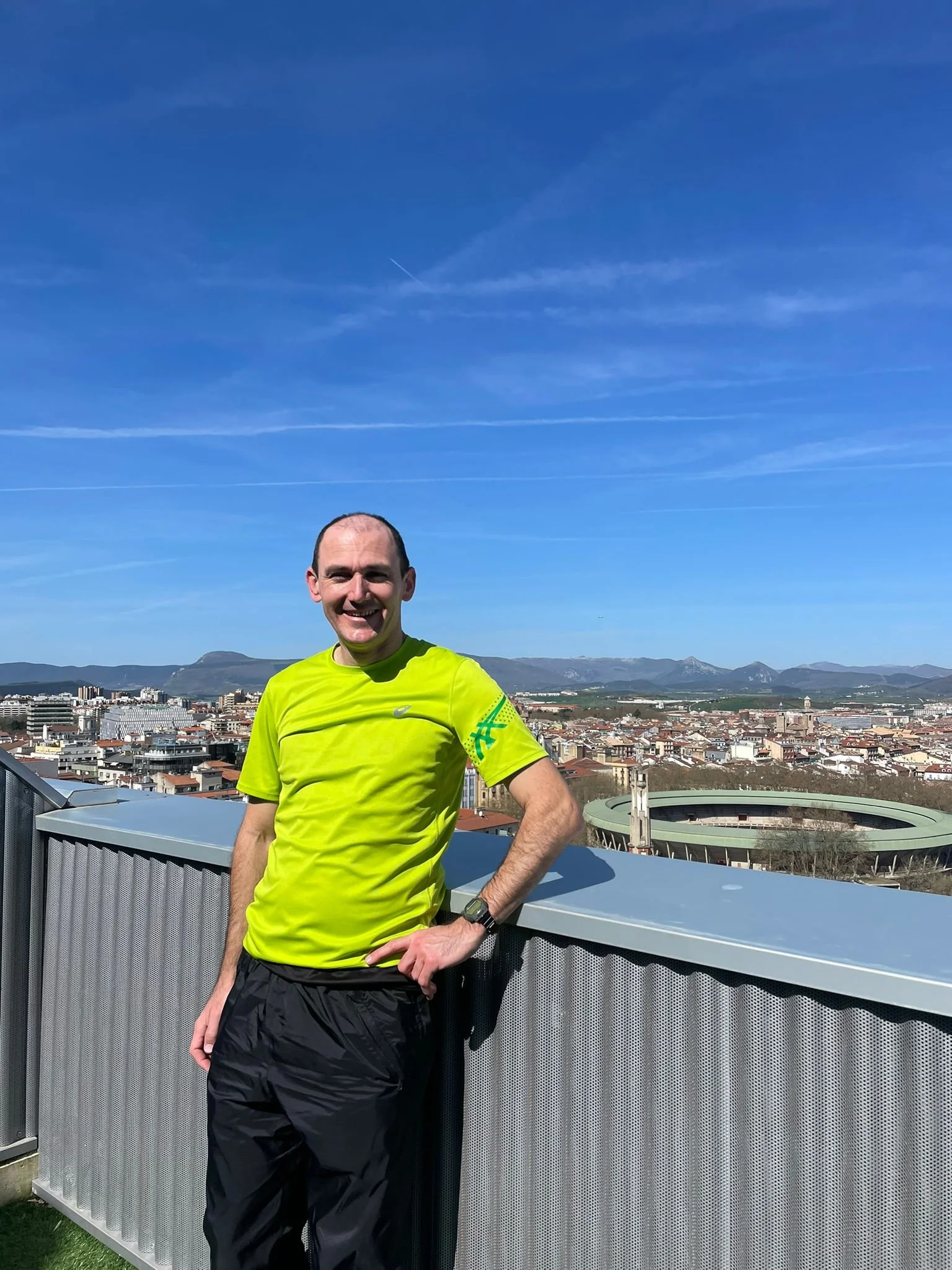
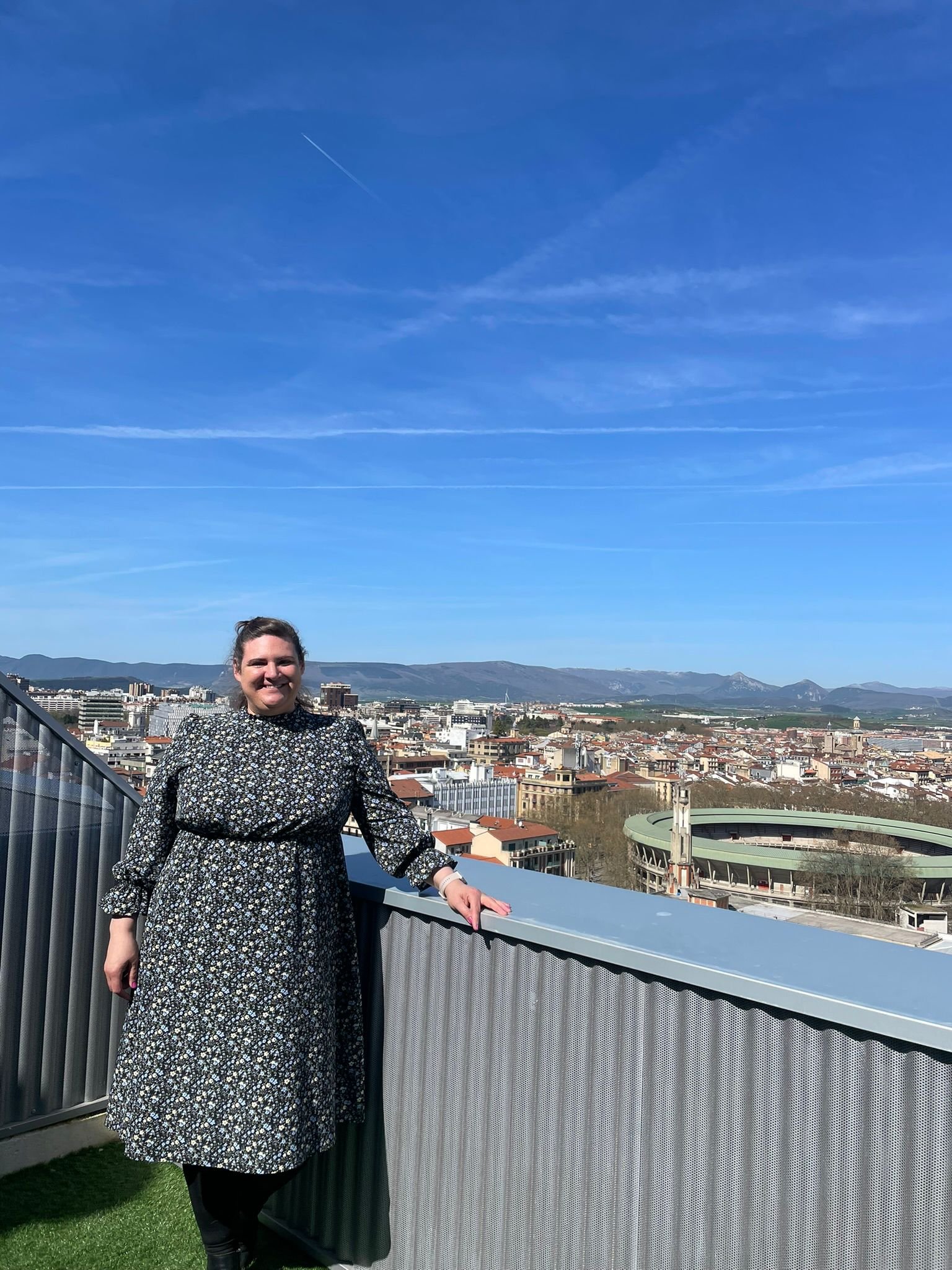
Andrew

Rachel
Paul
HOW A FEW YEARS TURNED INTO A LIFETIME
There’s something powerful about meeting someone from your same country abroad and, within minutes, realizing how many things you have in common. Rachel, Paul, and Andrew trace their winding paths across Europe, each one of them guided by chance and opportunity, building their lives far from where they began. And despite the differences of their individual journeys, they’re united by the deep connection of being Australian.
Rachel
I left Australia over twenty years ago. It was intended to be a break because I'd been teaching for five years there, and I'd kind of reached a burnout point. So I thought, “I'm going to go and pick grapes in vineyards for a couple of years.” And that couple of years turned into a couple more, and then a couple more. And all these years later, I'm still here. My family used to ask me, “When are you coming home?” But after a some time they stopped, and now it's just “Are you still happy?” I think they've accepted it.
I came over with a student working visa, and it kind of steamrolled from there. I started off working in Asil Unidos in Italy, where I just sang and played with kids in English.
That was in February and by September, I had a full-time job in a British-American preschool. I worked there for a few years but then I felt like I’d outgrown that, so I went to Russia for two years. While I was there, I realised that if I wanted to stay in Europe I would need to get a European passport. Mum's family is from Ireland, and through her I was able to get an Irish passport, and that made a huge difference. Not trying to be arrogant or anything, but I think having a European passport and an Australian passport is the best, they're two pretty strong passports.
Bianca
And how often do you go back?
Rachel
Usually once a year. I didn't go during COVID obviously, because nobody could go.
That was probably the first time that Australia felt far away, because I couldn’t get there. I'd like to go at Christmas but it's too hot in Cairns, where I come from. Plus the holidays are short and the flights are really expensive. Because as a teacher I get long summer holidays, I go from July to August. I always leave either the day San Fermin starts or just before and then I come back at the end of the summer.
Bianca
And what about you Paul?
Paul
I had an opportunity to work here, and at the time my son was in need of a school that would be more supportive. He had good options in terms of school and what to do in future here, so that was one of the deciding factors.
But what keeps us here? Obviously work because that pays the bills. But I also really like Pamplona and Spain in general. Pamplona, as a city, is really beautiful; the right size, not too big, not too small, it’s a really nice mix. I'm Australian, but my parents and wife are Italian, so I also feel this sort of affinity with the Mediterranean countries. Spain is a lot like Italy, and I feel quite comfortable in that a little chaotic and loud way of doing things. I feel as much at home here as I do in Australia.
Bianca
And have you considered moving back to Australia?
Paul
Not to live, no. I left Australia in 2007, and I just don't know if I could reintegrate. With everything that we've done and all the experiences we've had, to go back would be like stepping back in time. Not in a negative way as if Australia is backwards, but back in my own life journey.
Andrew
That makes sense to me, I understand. I mean, if you go back, it would take a while to realise it's not 2007 there anymore.
Paul
Exactly, things have changed there and we have changed too. Our perspective is different now. I've got really good friends in Australia, people I went to school with and we have a wonderful relationship, it's always great to catch up. It's so nice to visit, but I just don't think I would feel fulfilled if I moved back there permanently.
Bianca
And Andrew, what about you? Well, first of all, what brought you here to Europe?
Andrew
Back in 2004, like a lot of young Aussies, I wanted to go live overseas for a bit, and Britain offered me their working holiday visa for two years.
I thought I would be there for a year and a half, two years, and then I'd come back home. It ended up being four years in England, until my job fell through and I moved to Germany. I was just trying to extend the adventure I suppose, I didn't feel ready to go back home just yet. I ended up being there for nine years, met a Spanish girl, and she wanted to come back home to Pamplona, so I followed her here and we got married. Had I not met her, I don't think I would ever have moved here.
It was tough early on, because I was very much reliant on her social crowd. I found it weird and difficult to create my own. We've now separated and are officially divorced, but my choice is to stay in Pamplona because I really like living here, for basically the same reasons that Paul mentioned. It's a nice-sized city and I really like the lifestyle.
It's not just Pamplona, it's also Spain, and Europe as a whole. I've lived in Europe for 22 years now, and if I moved back to Australia, even though there are a lot of great things about it, I would be a long way away from these places. I've lived as a foreigner for so long and it has sort of become part of my identity. I'm not from this country, I'm a foreigner, and you see things through different eyes that way. I've come to really enjoy that. If I'd go back to Australia, and I'd say to someone, “Oh, I lived in Europe for 22 years”, no one's really going to care.
Rachel
I also feel that if I were to go back, I’d be saying goodbye to a huge part of my life. Sometimes I walk down the street, or I'm driving somewhere, or even just sitting at home, and I cannot imagine not living here. That being said, I also do love Australia, I probably love it even more since I’ve left. I used to take it for granted, but since I’ve left I’ve become a much more proud Australian. And I know that Australia is always there. Yes, it is the other side of the world, but at the end of the day the world is small. Over 10 years ago, my dad had a heart attack. It happened on Monday, on Tuesday I got on the plane, and by Wednesday I was home. That's when I realised that although it seems far, it is doable. I can get home in just a couple of days.
Paul
I also found that to be one of the most difficult things, especially during COVID. Australia is already on the other side of the world, and when that possibility to get on a plane disappeared, it wasn’t easy.
Rachel
No, it absolutely wasn’t. I remember my mom being so worried during COVID because of everything she was seeing on the news. But I was safe, actually living my best life: locked in my flat and loving it. I'm an introvert-extrovert, and since I had dogs I wasn’t trapped inside because I had to take them out. I was one of the lucky ones that got to go for a little walk.
Paul
You didn't get a dog once COVID started?
Rachel
No, no, no, I already had the dogs.
Andrew
Or decided to go out there and buy a dog? You could have put a sign on your dog's saying, ONE LAP OF THE BLOCK - 10 EUROS, maybe?
Rachel
No, I don't trust anyone to walk my dogs, I'm a very overprotective mum.
CULTURE SHOCK: WHEN CITIES INFLUENCE HOW WE CONNECT
What if the way a city is built drives the way people connect? What begins as a reflection on culture shock quickly turns into something deeper: a realization that architecture defines social life. In Australia, where homes and backyards are larger, connection often happens behind closed doors: barbecues, patios, and private gardens. But in compact European cities, with less private space, the street, the park, and the local bar become extensions of the home. Rachel, Paul and Andrew, observe how Pamplona's lively social life is also a consequence of limited private space, making personal interactions public and visible. Cities come alive not just because of their design, but because of how that design brings people together.
Bianca
Thinking back to when you first arrived in Spain or Europe in general, what seemed strange to you?
Andrew
I had visited Spain several times before moving here, and Pamplona a couple of times, so it wasn't such a shock. But if we talk about Europe in general, it was surprising to see how compact the cities are, and how there are people living in these tiny alleys. Growing up I always thought that everyone around the world lived pretty much quite the way I did, so it was strange.
Rachel
For me I'd say the first culture shock was when I got off the plane in Rome, and I was going by train from the airport to the train station. I remember going past rows and rows of flats, with washing hanging out the window… I'm a girl from Cairns, we've all got a garden with a hill's hoist in the back, so It seemed so weird to me. And probably apartment living too. It's something that I've learnt to love, but my family struggles with understanding it. Mum and dad always tell me they can't imagine living on top of other people, but honestly, I don't see my neighbours. Back home I felt like we live more on top of people because you see everybody coming in and out, and everybody knew what everyone else was doing down the street. I grew up in the 80s and if you wanted to play with someone, you looked out the window, someone was playing on the street. Mum always knew where you were, you may not have been at home, but she knew there were a number of houses you could have been at. Flat life is more like… who's in the park? You've kind of got to be intentional about going down and hanging out.
Andrew
When my parents came over to visit they mentioned something similar. They found it so strange to see young kids, aged 10 or 11, out and about at 10 o’clock at night. At home, that's considered horrible, you would think kids should be home in bed. I pointed out to my dad that they were just in the local school playing soccer or whatever, and that most of them lived literally within about a stone's throw of where they were.
Unlike Australians who might live in bigger houses, they live in small flats and need to get out. If they're not here, they're probably going to be in their room playing computer games. Which is the healthier thing for them to be doing? Actually, what they're doing is probably a better option.
Rachel
Yes, I also noticed that people here spend a lot of time outside. Benches get used, and a lot of it is probably because the flats are small that they feel like they need to get out. While at home you tend to invite people over to sit in the backyard or on the patio, here people hang out on park benches.
Paul
Following your comment about people being out a lot… I’ve spent a lot of time in the south of Italy, where people are always out and about. But when we came here, the level of activity in the bars and just the people out eating, drinking, for me, was something I'd never seen before. You sort of wonder how they do it. Even throughout the winter, and it's everyone: there's the young crowd, the 20 to 30s, and even the 50s, 60s, 70s are out in groups. Not having huge houses, when they want to catch up with friends they go out. So the town is really alive, I love it.
Andrew
That's what I think too. It's not the exclusive domain of the young, as you mentioned, It's all ages. I remember when I first moved to Germany, I had the impression that Germans were really outdoorsy people, more like the Aussies. When I told my girlfriend she said, “No they’re not, come to Spain and you’ll see.”
BECOMING PAMPLONESE
Living abroad isn’t just about learning a new language or navigating a different city, but also about absorbing a new rhythm of life. New habits and everyday routines like lunch, parking, or a midday nap, reveal how life in a new country slowly redefines normality. When asked what Spanish habits they have taken up, our three Aussies tell us about sandwiches that give way to cooked meals, quick errands that come with hazard lights and a newly acquired taste for rule bending, and how the once unthinkable afternoon nap becomes a weekly ritual.
Andrew
Lunch. Lunch before meant sandwiches, often with Vegemite. Nowadays, lunch for me means a sit-down meal on a plate, I'll make some curry or rice or something like that. I'm very much into that habit now. Pretty much the only time I'll have sandwiches for lunch is if I'm out and about, but when I'm home, it's very rare now.
Rachel
Parking illegally and putting my hazard lights on just to duck in somewhere. I would never do that at home. Never, never, never ! I mean, it's just not done.
Paul
What about disabled parking?
Rachel
No, I draw the line there. That's an ethical line.
I mean, I've thought about it, but I just couldn't. And when you can pull up on the side of the road and everybody will drive around you, why would you stop in a disabled parking zone anyway? I mean, I still get nervous, and if I see the parking inspectors, I always have an excuse ready for them.
Andrew
Like being Australian?
Rachel
Not that one. I speak too much Spanish and I can't fake it. Sometimes though I do say, “ I don't understand these things because I'm Australian”. For example, when the technician came over to fix the boiler, he was explaining it all to me and I just said, "I don't know, I'm Australian, I'm from the tropics. We don't have boilers there, we have air conditioning."
Going back to driving though, I think drivers here are quite courteous. For example when you need to merge out onto the road, people change lanes. It frustrates me when I go back and nobody's changing lanes. You know you've got to slow down, it's that easy. You just change lanes so everybody can just merge out easily.
Paul
So I have got one thing, but it sort of came from before being in Spain. I remember the first time being at my wife's house in Italy, noticing that after a big meal everyone would get up and just disappear, to go to sleep after lunch. At first I would stay up, watch some TV, just try to pass the time. But after a few days, I thought I would give it a go myself and see. Well, I haven't looked back since. On the weekend I love to have a siesta. But not a Spanish siesta, which I think is normally less than an hour. I'll go two, two and a half hours, I'm making up for the whole week.
Andrew
My wife didn't like calling it a siesta. She said it's a long lunch break.
AUSTRALIANS OVERSEAS
Being a foreigner always comes with a set of expectations, some lighthearted, some more complex. Paul, Rachel and Andrew find common ground in navigating a mix of curiosity, stereotypes, and shifting reputations about being Australian.
Bianca
What reactions do you get from people when you tell them you are Australian?
Rachel
Many people comment on the fact that I am not blonde. And I'm not a particularly dark Australian, but a lot of people still have that idea of blonde hair, blue eyes. And many others ask me “What are you doing here?”
Paul
For me, when I first came here and said I am Australian, there was a certain look on people’s faces. I discovered we have quite a reputation in Pamplona, that we come here and go completely wild. And the next thing is that they wonder what am I doing here, they can't understand why people from Australia would move here.
Andrew
I'm glad you spoke first because I would have said exactly that. In my first six months here especially, I got asked, as soon as I met someone, “Oh, you're from Australia? Why do Australians always jump off the Navarreria fountain?” I got asked that by a lot of people in the first few minutes having met me.
Or they would ask me “Did you meet your wife during San Fermin?” Or “Do you surf?” The impression that most Spanish people have of Aussies is that stereotypical thing of surfing or the Aussies during San Fermin.
When I was in high school mid-early 90s, two of my mates did an exchange in Germany over one summer. When they came back they told us, “Oh, they love Australians over there.”
So I think we've had a generation now who've learnt that, and now they're coming over here expecting to be loved, but carrying on like absolute tools. I have come across some people who are definitely a bit guarded about Australians. I remember an English colleague I had in Germany who had spent time in Australia, and also a girl I met in Norway. Both of them said that their impression of Aussies was not a positive one. Their idea was that we were racist louts, that people were very ignorant. And after talking to me for a while they wanted to know what I thought about this political situation. It was only when I mentioned that I hated what our government was doing in terms of refugees that the girl in Norway told me expressly, “Had you not said that, I wouldn't have wanted to continue talking to you.” Her impression of Australians was that they're just the kind of people you don't want to mix with.
So our reputation abroad is not what it was in the 1990s. There are still a lot of people who have very positive impressions of Australians, but it's not like it might have been some time ago. And another thing is that they think of us as drunken louts.
Rachel
Yeah, I often wonder if that's because our rules are so strict. I don't know how it compares to New South Wales, but, for example, in Queensland, you can't have alcohol outside on the street. Even for me, when I came over, 20 years younger, I was like “Oh my gosh, you can have a beer on the street”. Not to get drunk, but it just felt illegal. It feels illegal to be able to drink out on the street, and I think visiting Australians take that freedom a bit too far.
Paul
And just go crazy.
Andrew
But I also think people here are more controlled, they don't binge drink like we do in Australia. They've grown up with that culture where you enjoy alcohol, you eat with it. And you don't just think eating is cheating and go crazy until they vomit.
I think Britain has a culture even more so and we've inherited it. When I was younger, people were the same in Newcastle. There'd be lots of fights when everyone would go drinking. Here there’s a certain lack of aggressivity related to alcohol. You don't see that many completely wasted people.
TO SWEAR OR NOT TO SWEAR
Let’s be honest, Australians tend to swear… a lot! But what feels like everyday language back home might land differently in a new cultural setting. Our three Australians tell us how they manage their 'swearing reflex' depending on the context and how occasional slips can create cringe-worthy mix-ups to make you laugh for years to come.
Bianca
Are swearing habits different in Spain compared to Australia?
Rachel
I feel that people here swear a lot. Coming from a Catholic family the thing that shocked me was the use of blasphemy in their swearing. I heard it from my dad too, but here, I just felt they took it to the next level.
I grew up around a lot of swearing, I don't know if it's a Queensland thing or an all over Australian thing. But being a teacher, I've retrained myself, because if I swear at home, I'm going to swear at school too. It's just going to come out. So even when I'm with my friends, I say ridiculous things like kids' words for swear words, and people laugh at me. But I have to, because I can't have something come out in the middle of class.
Paul
I must admit, if I'm with Australians, I automatically sort of click back into it... I spent almost four months in Australia a few years ago, and when I came back I was swearing like a trooper. I was like, Jesus Christ what happened, you know? Because I do swear, I'm a swearer, It's part of me. But when I was in Australia, it just sort of went too far again.
Rachel
I find the same when I go home, I swear a lot more. And obviously I'm not working when I'm at home, so I kind of don't have to hide it as much.
Andrew
As an English teacher, I also try to keep it away from my classes.
Paul
Do you ever do classes where you teach some Australian slang?
Andrew
Slang yes, but I draw the line at swear words. When I'm teaching and they ask me something, I always ask them if it passes the grandmother test. Would you want your grandmother to hear this? If the answer is yes, then okay. If the answer's no, then not right now.
Bianca
Have any of you experienced miscommunication due to the use of Australian slang?
Rachel
I do feel like it happens all the time, even in the school context. I'd be in a meeting or something like that and I'd say something… my colleagues are all native English speakers but there are no Australians, and sometimes they have no idea what I’m talking about. They’d ask me if it is an Australian thing and I'm like “I don't know, I didn't think it was, but apparently it is.”
Bianca
Do you have any awkward or embarrassing situations where you had misunderstandings due to cultural differences or language?
Rachel
Oh yes! When you go to order chicken, and you don't order chicken. Here the word for chicken is pollo, dangerously close to polla, which means something completely different in Spanish. I had a parent meeting once, and it was one of my first in Spanish. We were talking about a year one student and the mum was asking me how she'd eaten. She'd been eating really well and I said, “Ha comido mucho polla hoy”. So the mum replied, ”Creo que quieres decir pollo”. I was so embarrassed… I apologized using the Australian card.
THE VIEW FROM ABROAD
At a distance home can come into sharper focus. Our three Aussies reflect on what they miss and how they see their country from afar. From confronting political realities to noticing habits they once took for granted, they reveal a more layered, and at times conflicted, sense of national identity. “Home” becomes less about a single place and more about the people, memories, and moments that continue to anchor them, no matter where they are.
Bianca
How has your perception of Australia changed since leaving it?
Paul
For me, the whole situation with refugees and the offshore detention, 10 to 15 years of not deciding, it's just something I really struggle to accept. And I feel, to say it honestly, ashamed that the Australians are doing that. Leaving them there for years, wasting away. I just think it's unacceptable. I'm sure that a lot of Australians there don't agree with it but unfortunately, we all get tagged with the same thing.
Andrew
A misapprehension I had before moving to Europe was that Australia had a larger number of refugees than what other countries get. You realise now that other countries are getting just as many, if not more. There's nothing particularly special about the number of refugees we get, and it's not something that we deal with alone at all.
One other thing that has changed my perspective on Australia, is that we don't really value and appreciate other languages. I remember once a soccer player made a complaint that people in the Australian media could never pronounce his name correctly, whereas media from other places would. And another, a less important thing perhaps, is that people back home complain if someone dares park their car on the street in front of their house. It's one of those problems…With all that space!
Rachel
Yes! Or too close to the driveway.
Andrew
Or they've got their wheelie bins out front and someone else dares put something in their bin… Could you explain that to someone here?
Bianca
And what do you miss the most about Australia?
Rachel
For me, my family. I would love to have my lifestyle here and to be able to click my heels on the weekend, and teleport back. This is the life that I've chosen and you learn to accept it, but at Christmas, or when everyone's together for someone's birthday, they're the hardest times. That's probably the biggest thing for me.
Paul
Same for me. Family and friends. As time goes on, you learn how to manage it better. And you really enjoy it when you do go back, I think you savour the relationship more because you don't have it every day. But the other thing I miss is certain places. There's a different sort of beauty in places in Australia which I miss as well.
Rachel
I do think in saying that, we also live in a very privileged time. When my grandparents went to Australia many years ago, they did not have the luxury of speaking to their family back home, seeing their faces. Even when I was first abroad, when there was no FaceTime and you still had to pay for phone calls, being able to send an email that would deliver the news straight away was great.
Andrew
I find when I go back to Australia, I really am reminded that this is home. It's where I grew up and it still seems so familiar. There is also a sense of familiarity in the other places where I lived, but in Australia the sense of home is so much stronger. It's not necessarily that one place is better than the other, it's just different. When you go home, the birds sound different, I miss the sound of noisy birds.The trees look different, even the forest smells different. I've always known in the back of my mind that I can go back whenever I want to.
Rachel
That's what I wanted to add, other than missing my family, the thing I miss is the wildlife, because it's nothing like anywhere else in the world.
Bianca
So where is home for you?
Paul
It's not an easy one. Australia is still home. But it's not that simple. Some of the other places where I have lived felt like home too. Probably because it’s not the places but the people that make you feel like you belong.
Rachel
When I'm here, I feel like I'm home. And when I'm going back to Australia, I always say I'm going home. And when I'm coming back to Pamplona, I'm always coming home. So home is both places, for different reasons. It is in Australia because my family's there, I grew up there, things are familiar. In Pamplona different things make me feel at home, like my way of life, living by myself, and being independent. Nobody thought that I was going to last this many years here. I've proved them, and myself, wrong.
Andrew
I guess home is never going to be 100% in one place again. After having travelled around and lived in different places, your loyalty is not so much to a place, but really more to the people.