An Interview with Michelle Ekkelkamp and Bolanle Idowu
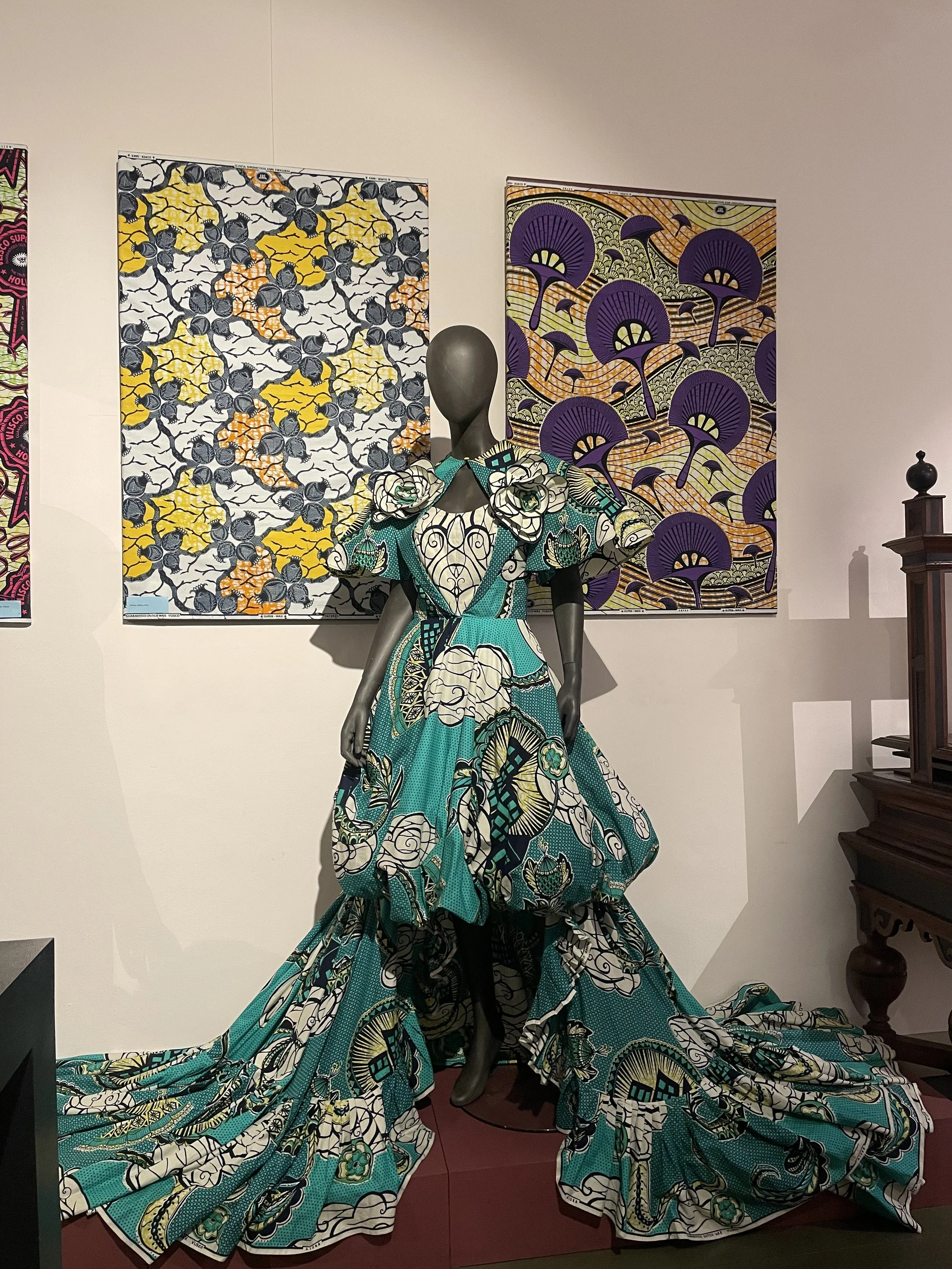
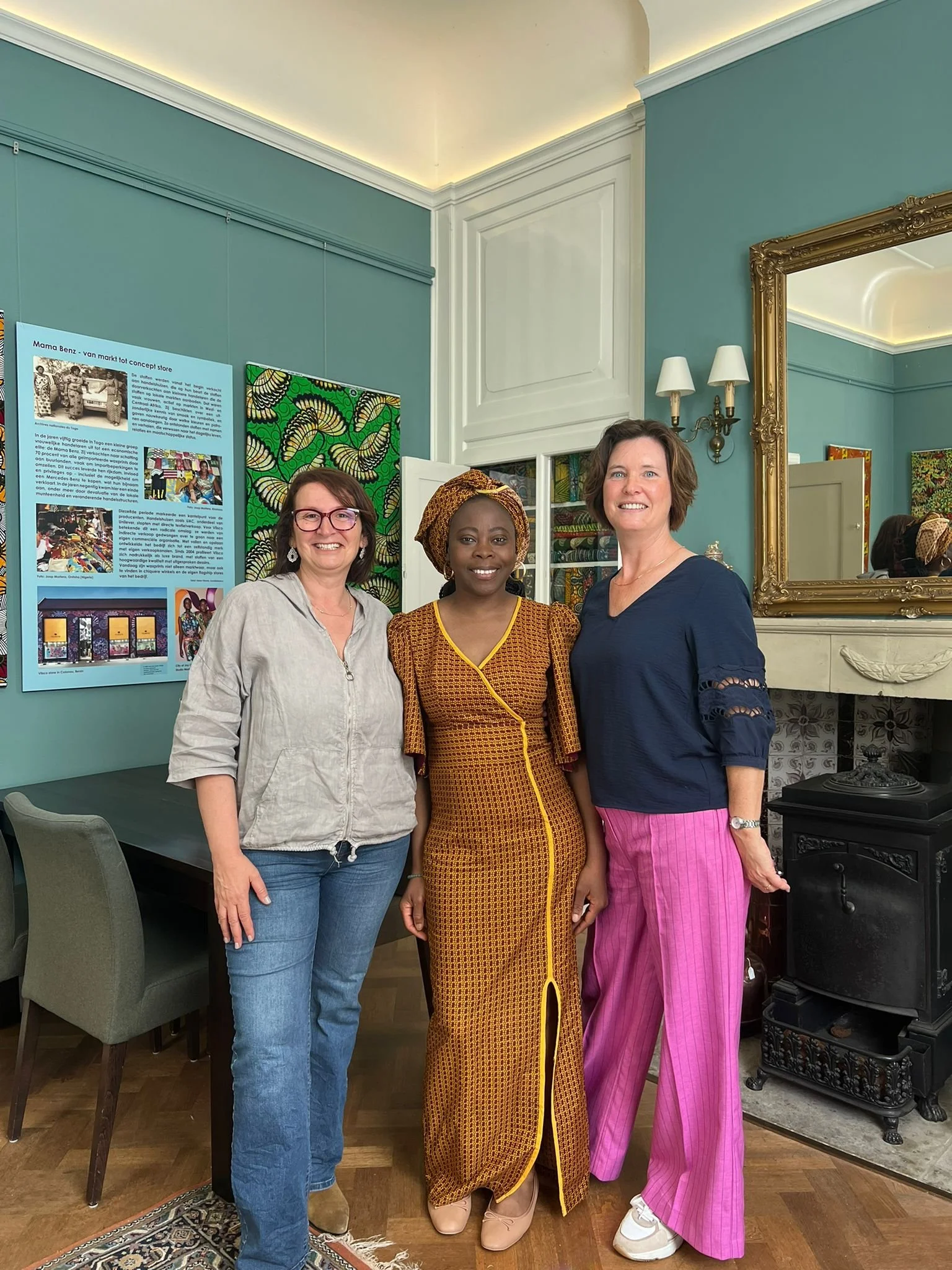
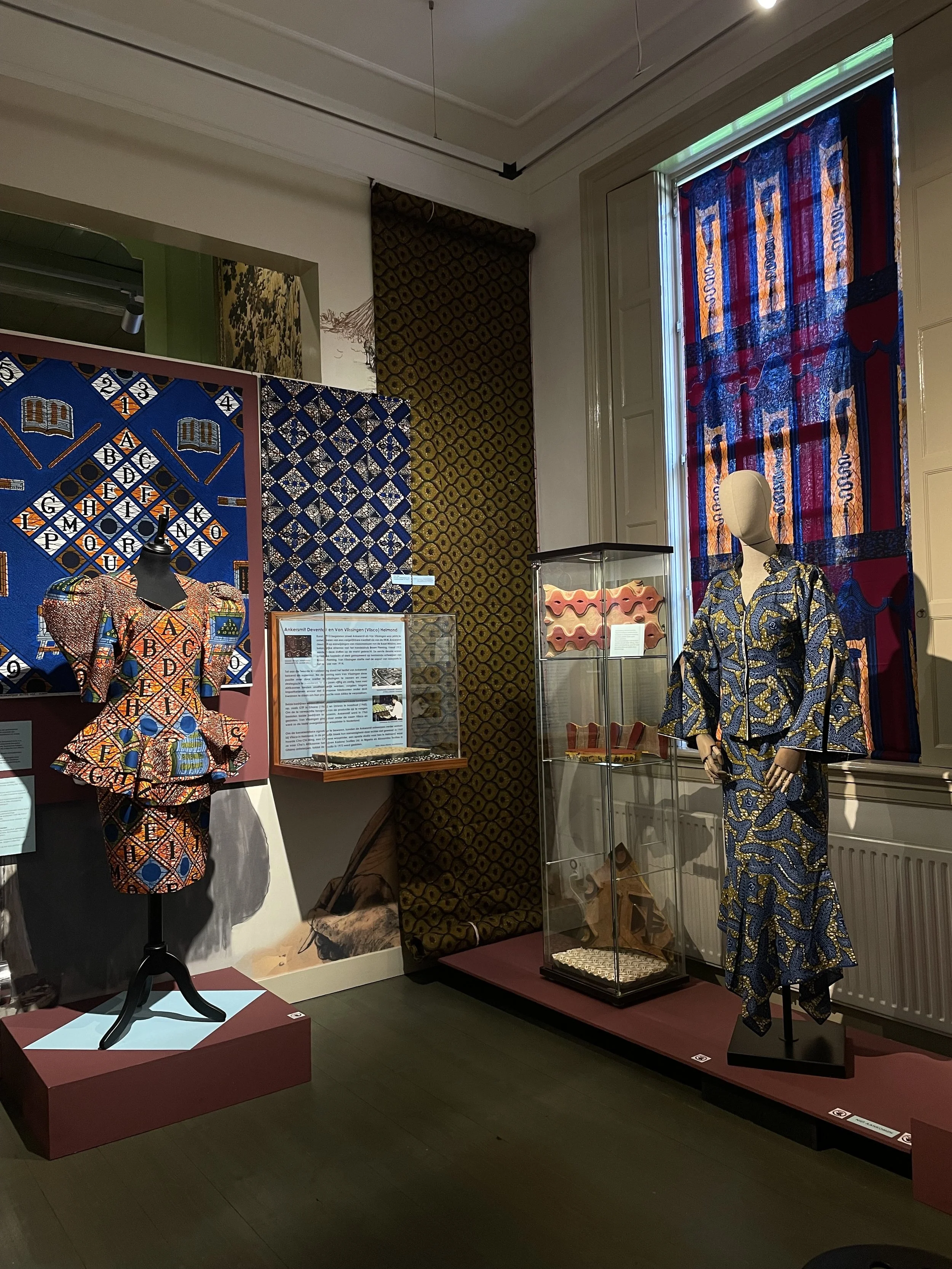
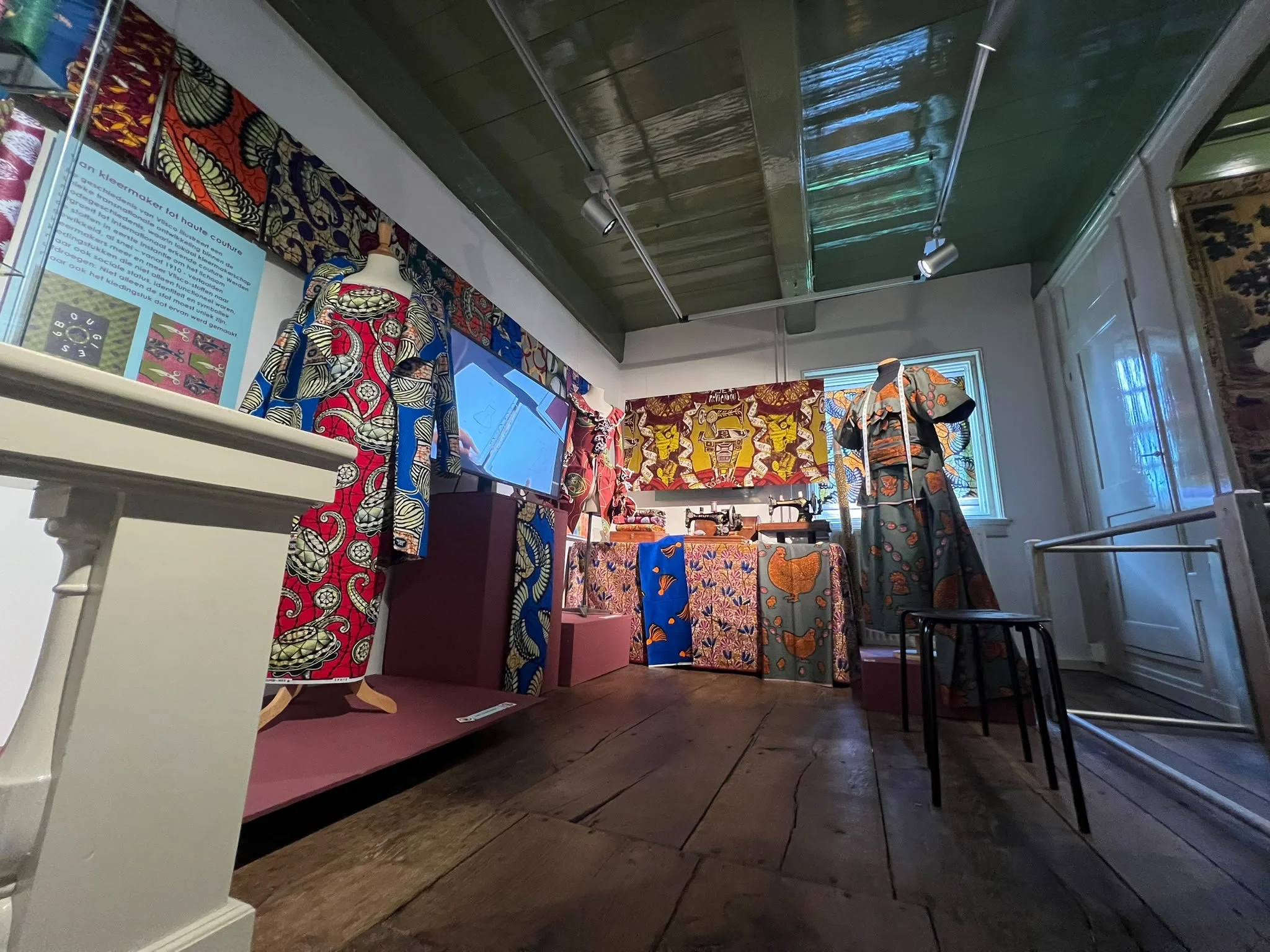
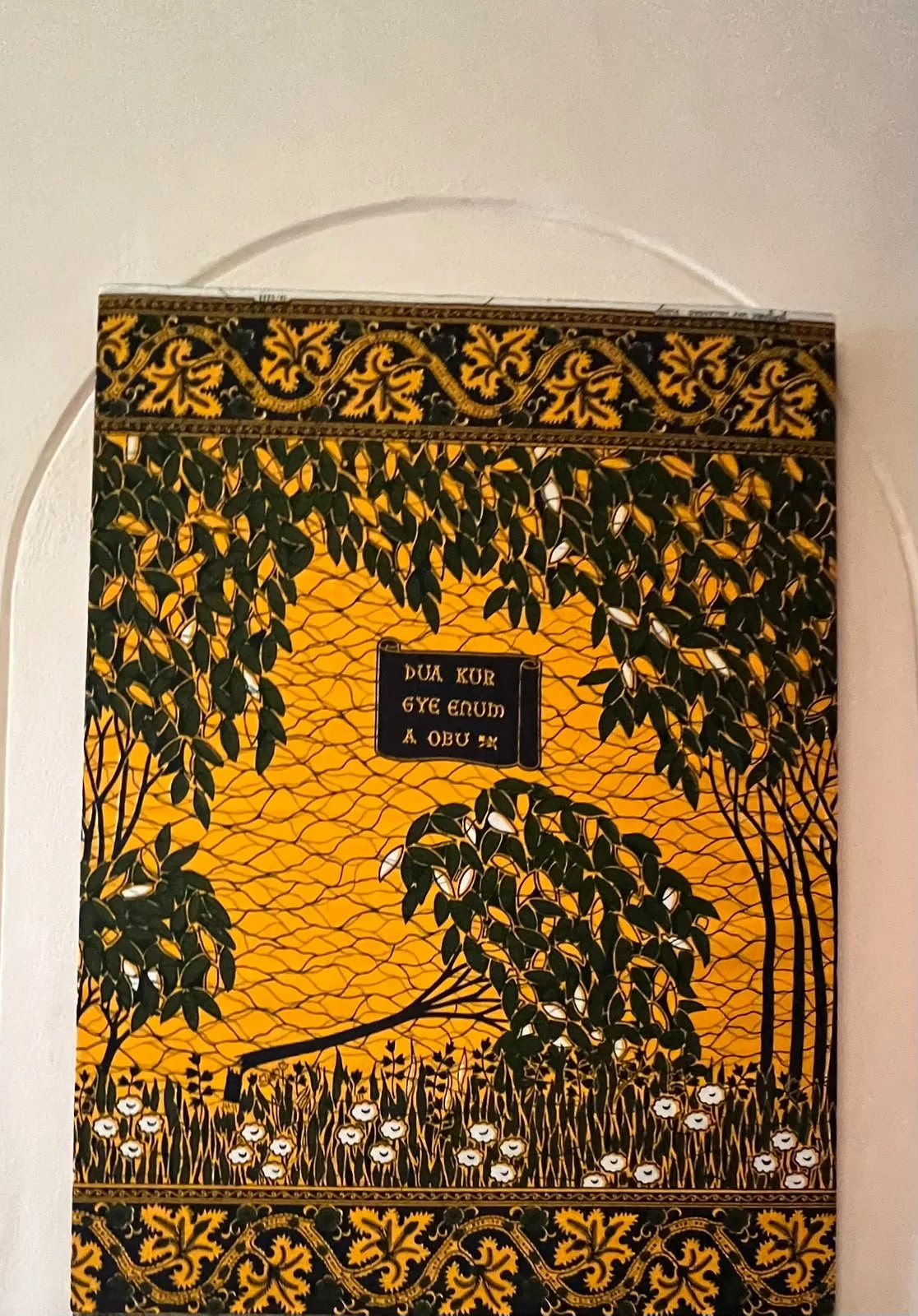
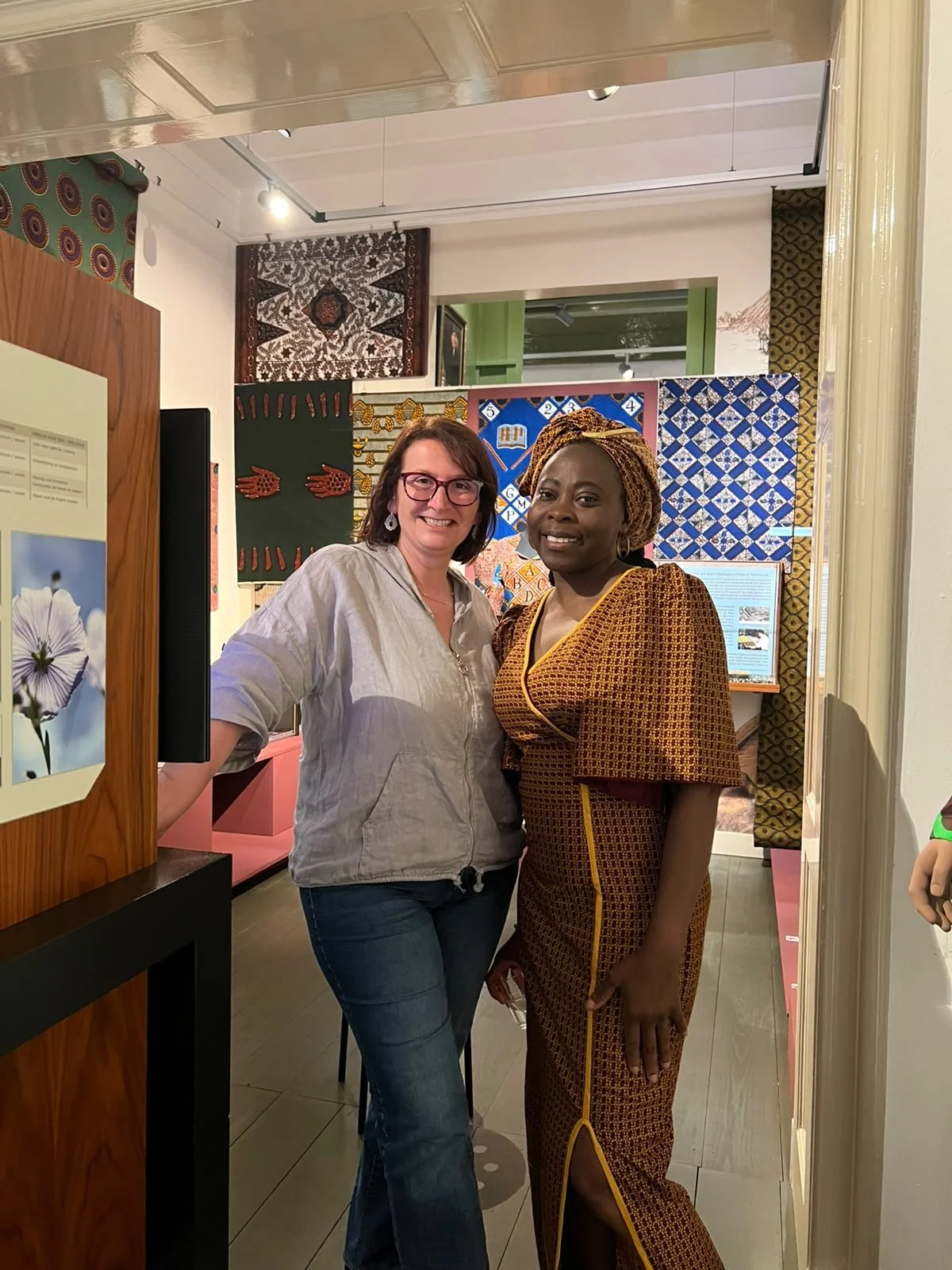
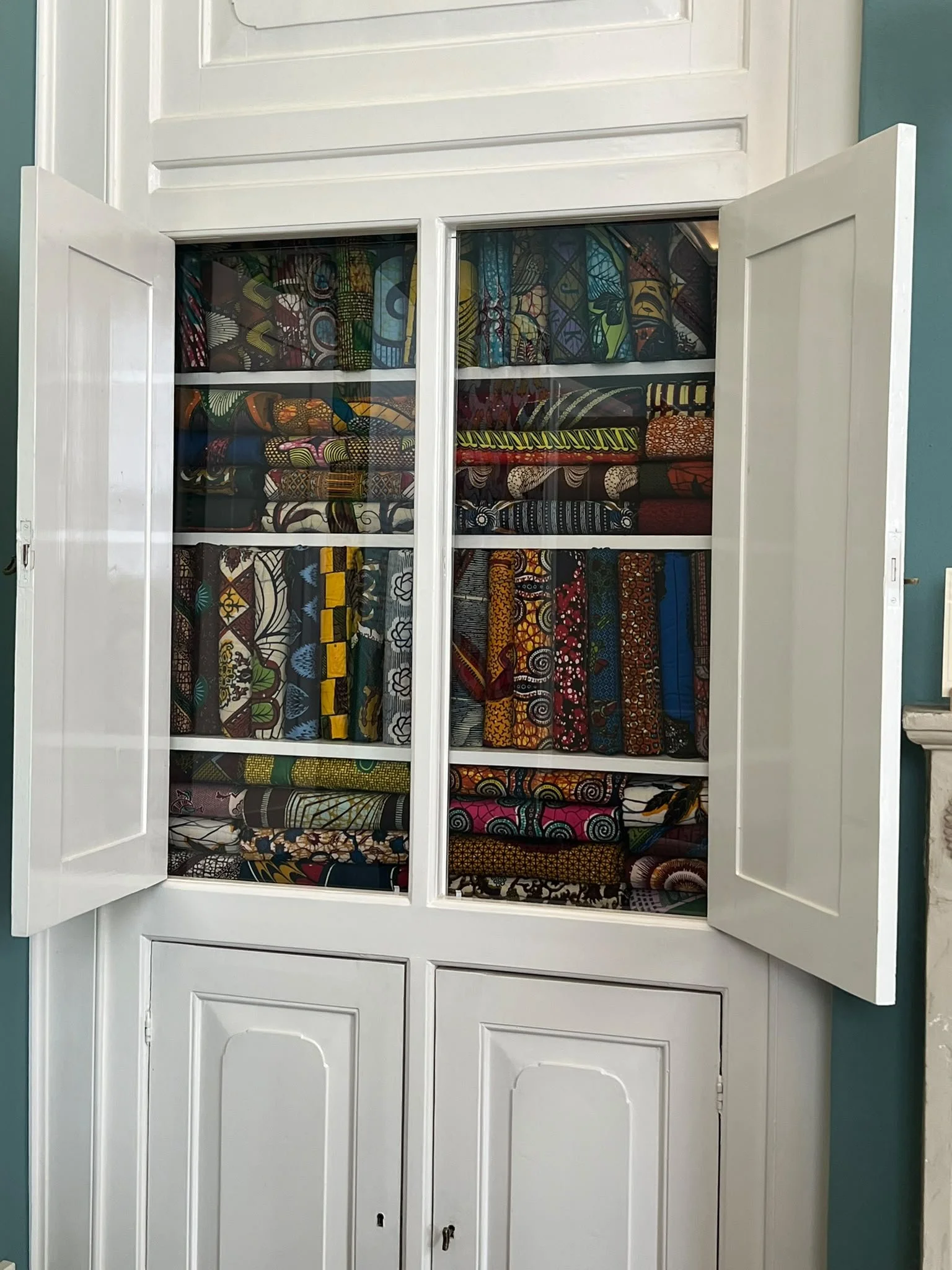
I was delighted to be able to interview Michelle Ekkelkamp and Bolanle Idowu to reflect on what it means to literally wear your identity on your sleeve. The exhibition "Identiteit in Kleur" showcased at the Bussemakerhuis Museum in Borne, the Netherlands, explores the connections between African textile traditions and the Dutch textile heritage.
Our conversation focuses not only on textiles, but also on women as creators, entrepreneurs, storytellers and guardians of cultural heritage. We talk about the role they play in keeping traditions alive, and about what happens when these traditions travel into a new context, where their meanings and significance may not always be immediately understood.
Finally, we examined the approach being taken by the museum in looking for new ways to engage different audiences in order to make heritage relevant and meaningful to people from different generations, backgrounds and experiences.
"Identiteit in Kleur" builds bridges between cultures, connects past and present, and invites visitors to see familiar histories through a different lens. If you are in the area, this exhibition is one you don’t want to miss!
For those of you that would prefer to read this interview in Dutch, click here.
Good morning and thank you both for being here today to present this amazing exhibition. We're here to talk about history, about fabric and about what it means to literally wear your identity.
Michelle, could you start off by telling us about your role here, and about the connection between Borne and these textiles from West Africa?
Michelle: I'm the operational manager of the Bussemakerhuis Museum, which is based in a 17th century home here in Borne. A family of linen merchants lived here until the early 19th century, after which the building became a residence for several families up to the 1950s. It was eventually converted into a museum in the 1990s. The whole Twente area has a really rich textile history going back to the 17th century. It actually started here in Borne, and then went on to the bigger cities like Enschede, Haaksbergen and Almelo. So we are a textile museum, and apart from our permanent exhibition, we also have temporary exhibitions connected to textiles from all around the world.
And Bolanle, you and I met about three years ago when I interviewed you for my book, HomeUnbound. You're from Nigeria and during my interview, we touched the topic of traditional clothing and the importance of it. The paragraph’s title is “Wearing My Identity” and it reads like this:
“Another thing that helps me stay in touch with my culture and background, regardless of where I am, is wearing Nigerian clothes. They represent my identity and my history, which I don't want to lose. When meeting other people, it's always useful to reflect on who you are and where you come from. It helps people to know you better and connect with you. And you help them broaden their knowledge because when you start saying little things about you, you trigger their curiosity. One doesn't have to go to Nigeria to learn something about Nigeria. You can learn a lot just by meeting its people. Irrespective of how much you blend into your host culture, you should always keep your identity. It's what makes us. If you throw it away, how do people know who you are?”
These words ring as true today as they did at the time I interviewed you. So my first question for you is, what does it mean to you to see traditional fabrics from your culture celebrated here, specifically in the Twente-Borne region, where you have been living for the last few years?
Bolanle: Honestly, it was really exciting. I didn't expect to see something like that around here, especially not in Borne. Maybe in Enschede, but not in Borne. The first time I came and saw the exhibition, I felt like a part of me was here, because it connected me with where I come from, who I am, and where I've been. I saw things that I could identify with, things that I was used to wearing from where I come from. I even saw a specific fabric that I remember seeing women wearing during my childhood. Honestly, I didn’t just feel excited; I felt that there was something that belonged to me here. Having lived in the Twente region for several years now, knowing that there's a connection between where I come from and where I am now, gives me a sense of belonging that allows me to feel comfortable here. That’s what this exhibition means to me.
That is indeed a special connection.
This exhibition screams the word ‘women’. There was a quote from the curator, Wilma Witteman, that piqued my interest:
“I also want to present a different image with the exhibition. Many people still have an outdated view, but I want to show that African women are strong and enterprising.”
So women as entrepreneurs, leaders and storytellers… Michelle, how does this exhibition highlight the role of women as active creators and not just as passive consumers?
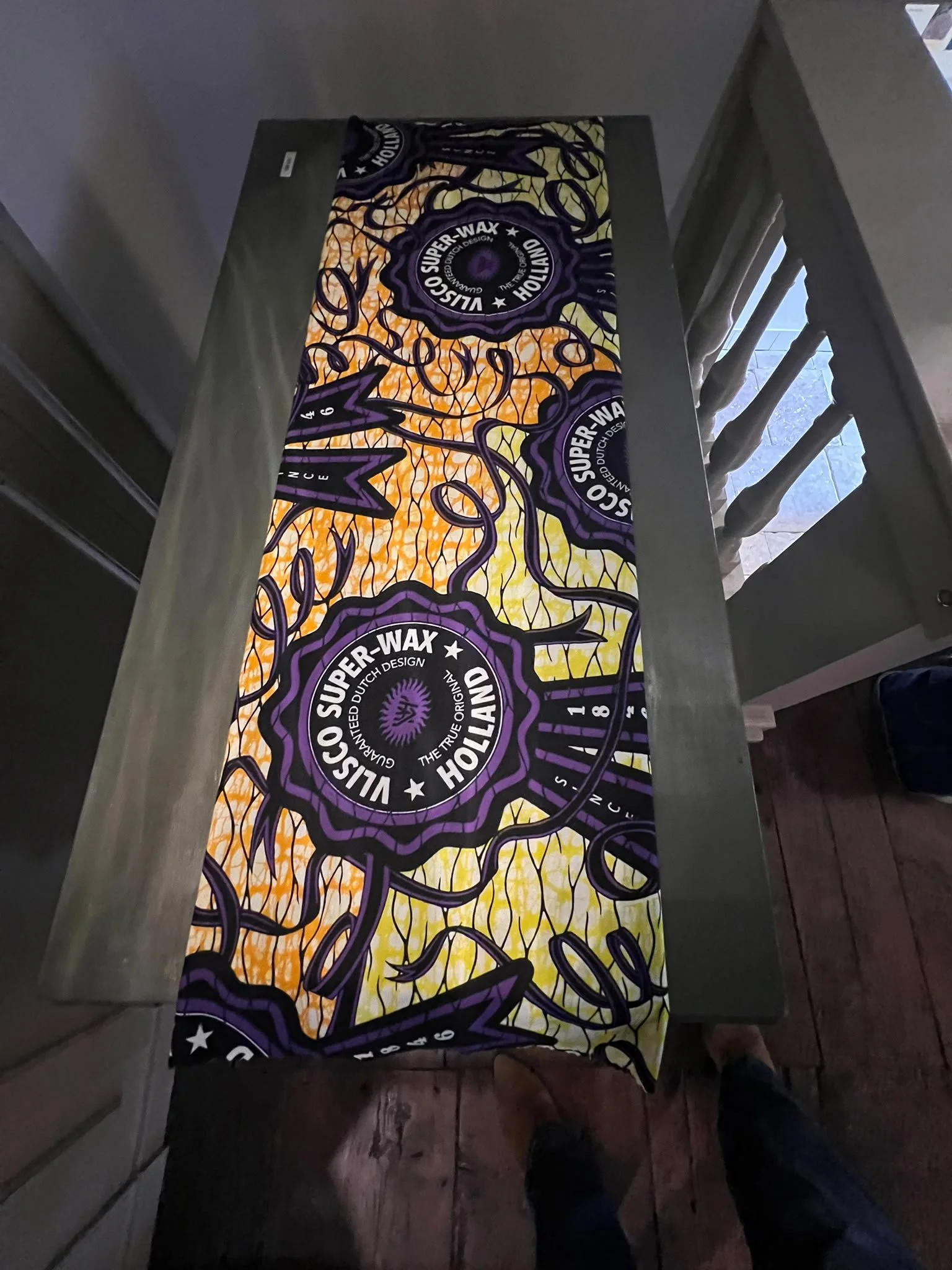
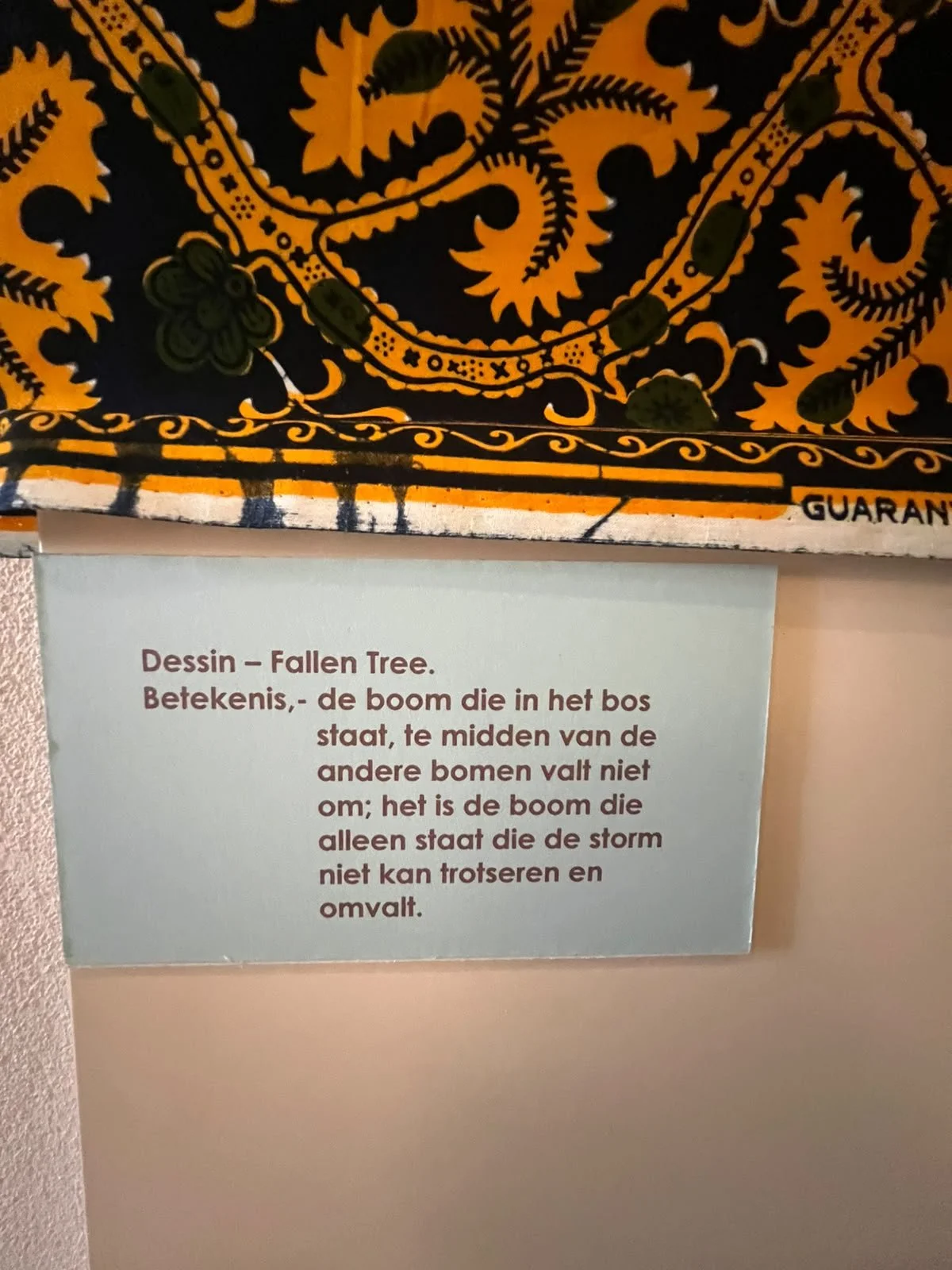
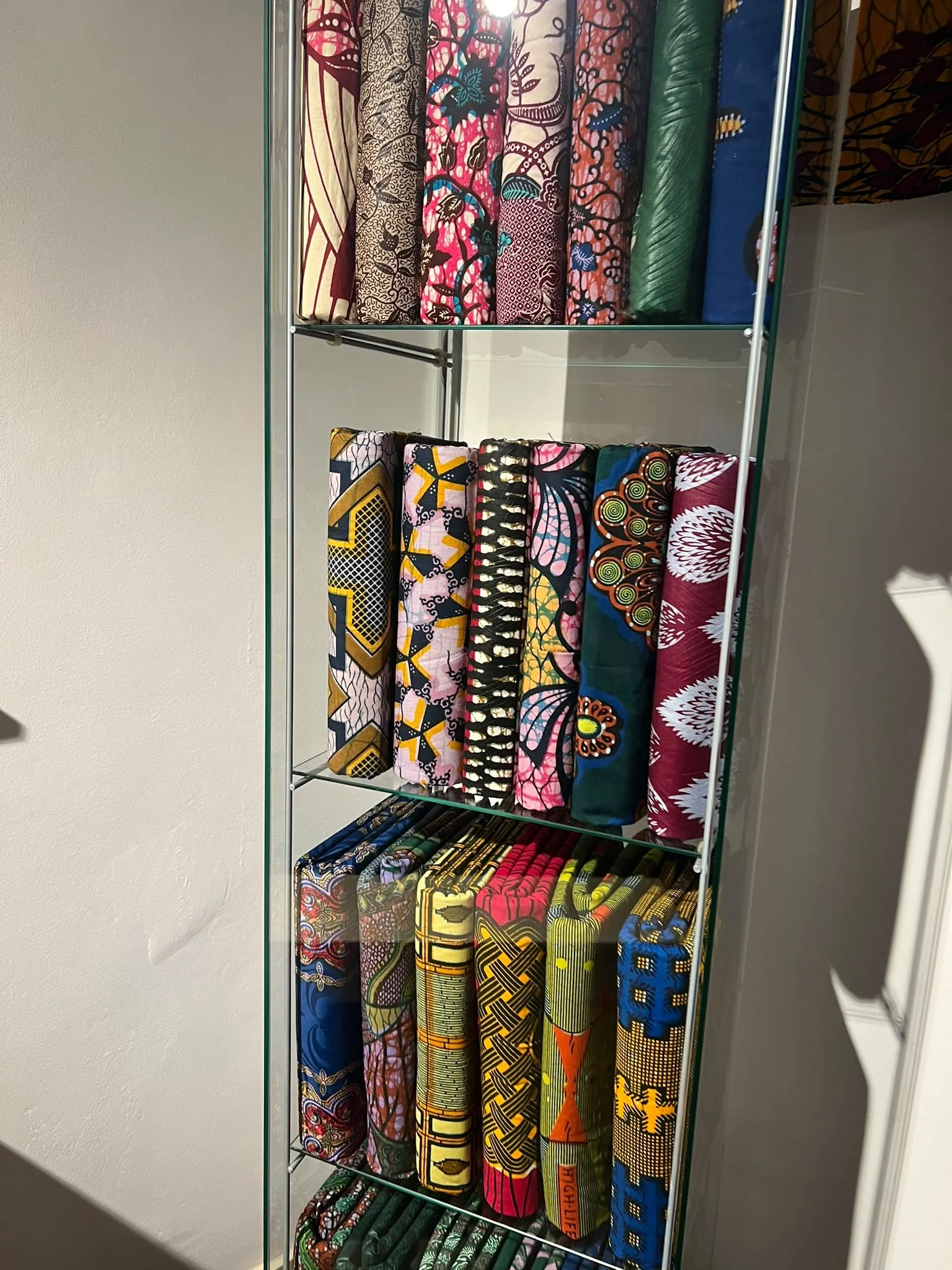
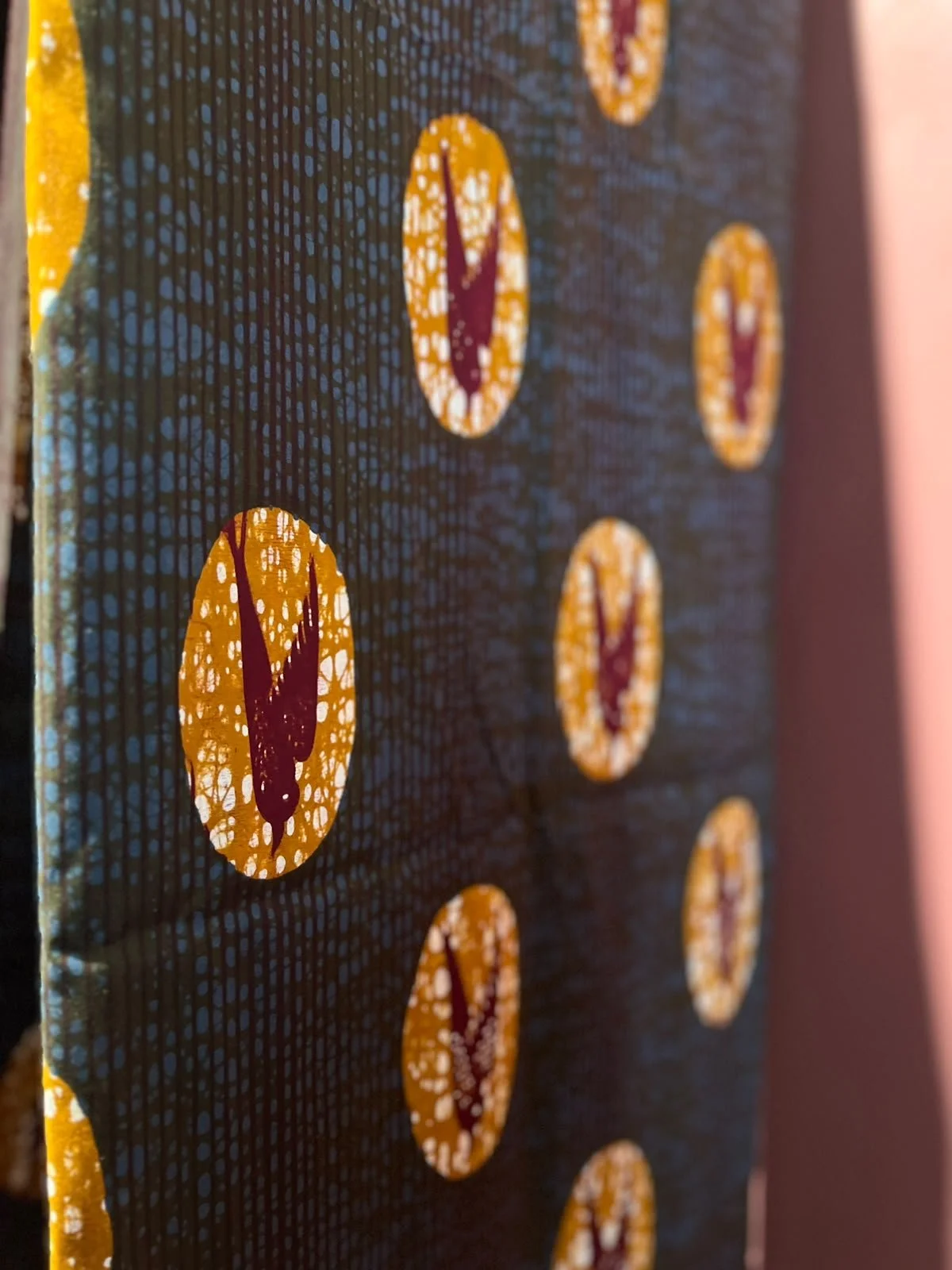
Michelle: I must say that I've learned a lot while Wilma, our curator, was putting this collection together. Something she wanted to emphasize is that this exhibition is not only about the company making the fabrics, Vlisco, but also about the women wearing the clothes, and how they personalised and used the textiles to express themselves. So part of the exhibition is about the entrepreneurs who bought the fabrics from Vlisco and sold them in the markets of West Africa. These ladies were the ones that made a name for Vlisco’s fabrics and designs which, weirdly enough, were all made here in the Netherlands without any specific meaning. It was the local communities in West Africa that started to use the fabrics to say something, giving them meaning.
They attributed symbolic significance to individual designs, like expressing independence, being well-educated, or open to a new relationship, for example. Those women were the influencers of their time. In some regions, they also became remarkably wealthy, earning the nickname “Mama Benz” because their success allowed them to purchase Mercedes-Benz cars, a rare symbol of prosperity and status at the time. The “Mama Benz” played a significant role in the economic and social development of local women. Originally, the fabrics were sold in six-yard lengths, enough to make a three-piece outfit. It was only later that people began cutting the fabric into pieces to create more dress-like garments.
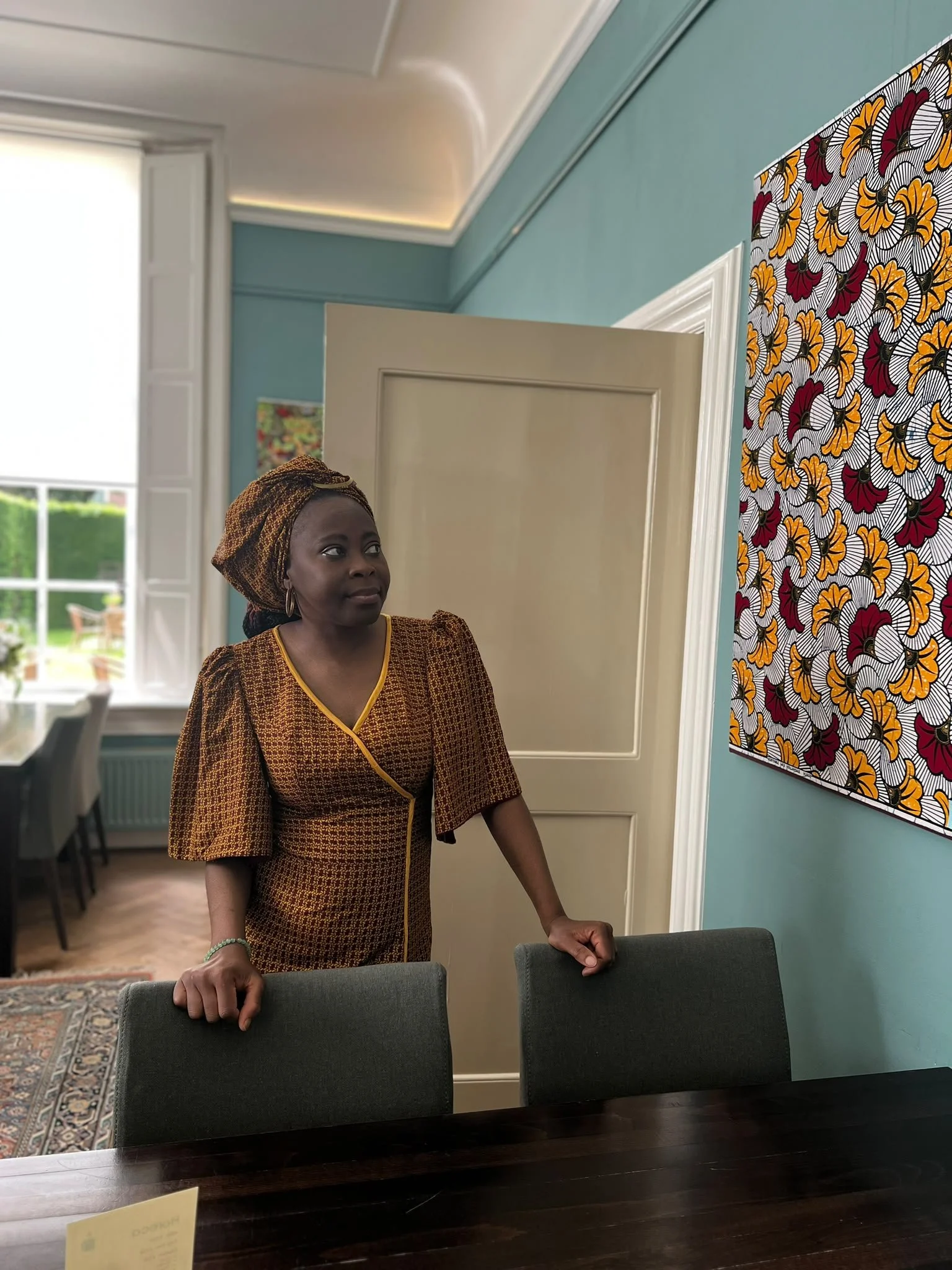
Bolanle: Yes, at the beginning, you just used straight material to make double wrappers. So you would wear a blouse and then tie the two wrappers around you. But now you can use the fabric to make all types of clothes, like what I'm wearing.
So, if I understand correctly, Vlisco created the fabrics and their patterns, while West African communities were the ones who attributed cultural significance to them?
Bolanle: Yes, and it probably also has to do with colonisation boosting the adoption of these materials. These were the fabrics that we had access to, and they had beautiful designs, so we collectively wore them to identify ourselves.
So it was taken as a positive and not as an imposition?
Bolanle: I would say that maybe underneath, you could say it was imposed, but people saw meaning in it, so they only took away the positives and just left the negatives behind.
And would you say that it’s still like that today?
Bolanle: I think today nobody even thinks about it, we just want to look nice and happy, we don't bother with the stories behind it.
I can see they definitely appear to make you happy. Bolanle, tell us something about what you are wearing today.
Bolanle: Oh, you want to see what I'm wearing? This is it. I'm really proud of it. I have lots of these here in the Netherlands, and I'm always looking forward to summer so that I can wear them again.
Michelle: It's beautiful.
So what does this dress say about you?
Bolanle: If I step out now and you see me wearing this, what comes to your mind? You’d say, “Well, this is an African or a Nigerian lady.” So that helps others get an idea of who I am, and where I'm coming from. And if you talk to me, or if you want to know more about me, you already know something about my country and my culture.
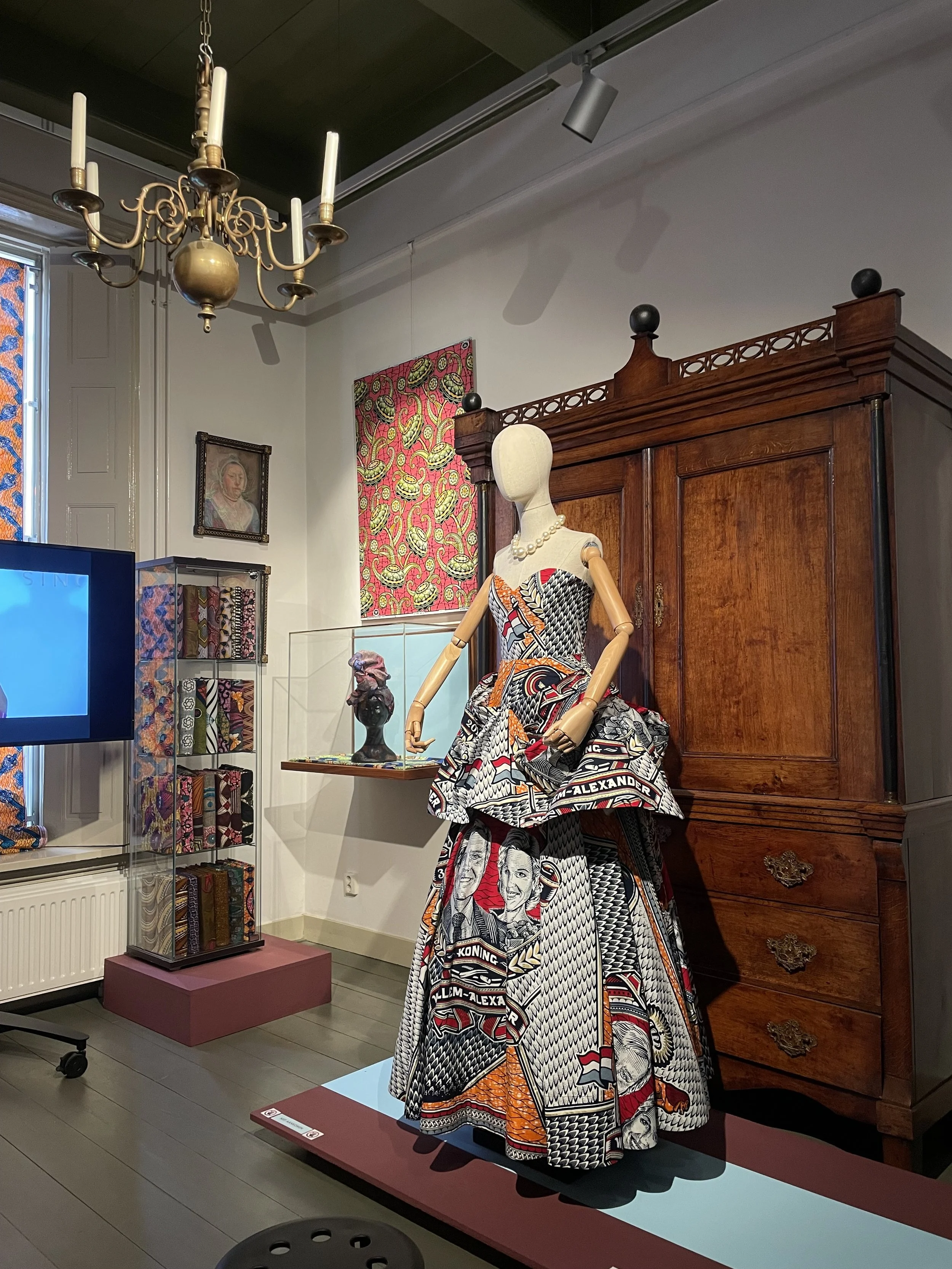
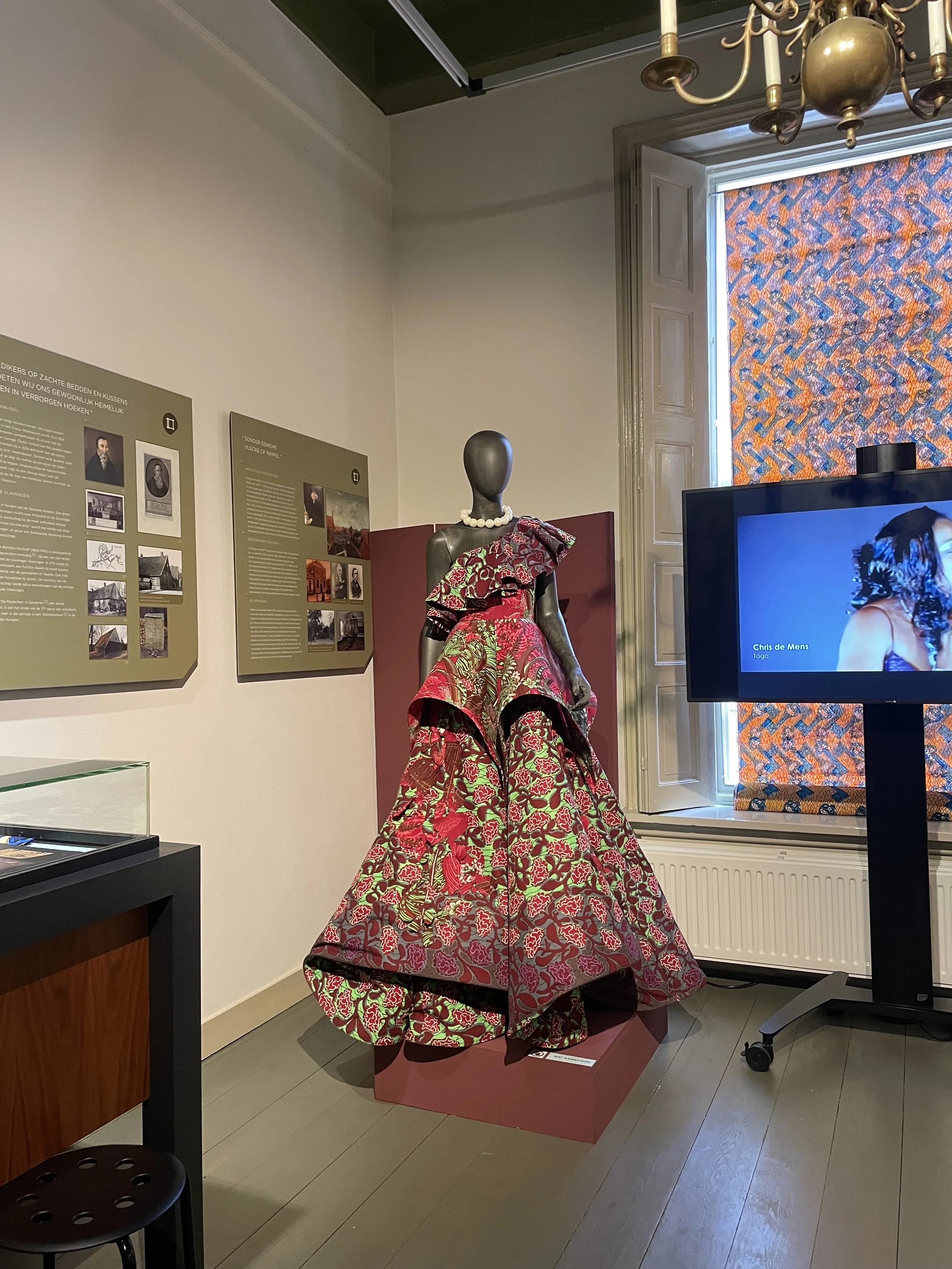
Michelle: And when you look at what is showcased in this exhibition, it's not just dresses for everyday use, there are also really elaborate gowns.
Bolanle: Yes absolutely. You could wear these fabrics to the office or to weddings, people even make suits out of these materials. I think these days, fashion has gone really wild, you could make virtually anything with these materials now. Some people even manufacture materials with their faces on it for special occasions, like weddings or when someone is becoming a king, or even for kids' birthdays.
Have you ever had one made for you?
Bolanle: For me no, but I wish I had.
Well, there's still time.
This exhibition presents fabrics that have been sold throughout all West Africa. Bolanle, since you’re from Nigeria, Could you give us some examples of what certain fabrics represent in your culture?
Bolanle: Sure. I come from the southern part of Nigeria, the Yoruba speaking part. Mostly we wear these materials when we have ceremonies, like when someone is celebrating the birth of a baby, or getting married, or has just built a house. In Nigeria, taking out a mortgage is not very common. Instead, people save up and build their own homes over time. As a result, completing a house is considered a major achievement and something worth celebrating. When organising the celebration, the family often chooses a specific fabric for everyone to wear. In this way, the fabric becomes a way for the community to share in and celebrate someone's achievement.
And when you say ‘this material', you mean that each guest will make clothes on purpose for that celebration using the same material?
Bolanle: Yes, exactly, everyone wears the same fabric. If we have a hundred guests, each person will be wearing an outfit made of the same material. I think it's really special; it connects us to our group identity. In the eastern part of Nigeria, we have the Igbo women, who take it even more seriously. They have women's groups and youth groups that all wear a certain fabric. Everyone looks forward to getting it because it tells a story of where you come from, or who you belong to. If you don't belong to a women's group in the village or in the church or something like that, it's like you're not there. So everyone is eager to save their money in advance, because not being able to afford it is not an excuse. It's something really special that connects us as a group.
So it also tells a lot about the social dynamics in Nigerian culture. As an individual, you almost don't have value or presence, you need to be able to be connected in order to belong, is that right?
Bolanle: Individuals of course have value but we are more of a collective society than an individualistic one. So, yes, in our society it's very important that you're always part of something. We believe that everybody should belong and that everyone should be counted in. Especially women, because we feel that women do a whole lot in our society: they build our values, and ensuring that these women are able to leave a legacy and do something that will live on beyond their own lifetimes, is very important to us. And wearing our identity through clothing is part of that.
Wow, that’s amazing.
I can imagine that moving from West Africa to Western Europe changes how these clothes are perceived, because the symbolic meaning associated with them is lost. That’s because these clothes are being worn out of context, right? So Bolanle, how do people react when they see you wearing these garments? And what do you wish others would know about them?
Bolanle: Every time I've dressed in my traditional way, people stare. Maybe with admiration, maybe not. I know that when I wear this, it catches people's attention, because it's not the usual thing you see people wearing every day here. Those who understand where I come from, they probably admire it. But I also think that you need to be courageous enough to wear your identity, even in places where it's not very common. And then you need to be able to tell a story about it.
Have you had any negative reactions to it?
Bolanle: No, not really.
Michelle, what have you learned in the process of setting up this exhibition, and more specifically about the role of fashion as a declaration of identity?
Michelle: That's a really complex question…I've learned that expressing yourself with fashion is a worldwide phenomenon. Even here, in this area of the country, which is more or less traditional, the way you dress says something about who you are or which group you want to belong to. Here too, the way you dress, style your hair, and wear your makeup all communicate something about who you are and how you choose to express your identity. It made me look at fashion in a different way. I hadn't realised just how specific the company's designs were, or how their meanings could vary from one country to another. A particular pattern might carry one meaning in Nigeria, for example, and an entirely different one in Benin.
It almost makes you want to get on a plane and go see them for yourself …
Michelle: I like colourful clothes myself, so I'm actually surprised that this fabric is not for sale here. They should be in the shops because they are really nice, and I know some people here in Borne who are big fans of Vlisco’s designs. In fact, at the opening, there were a few ladies wearing Vlisco clothes that they had made themselves.
Well, this could be the beginning of something…
Curating an exhibition that engages with different cultures comes with a lot of responsibility and requires a thoughtful approach. Michelle, who is this exhibition for? And what value do you think it brings to its visitors?
Michelle: I think it is, first of all, for anybody who's interested in what you can do with textiles. For example, in the past we had an exhibition with kimonos from Japan, which attracted visitors interested in Japan. The audience was really diverse then, and I think we will have the same kind of audience this time around. We are also attracting people who have worked for Vlisco, or who have lived in Western Africa as expats. And of course, the people who are interested in textiles and fabrics in general. They come from all over the country, and from Germany. I think we've built up a fairly strong and loyal audience, with people who regularly come back to see our latest exhibitions.
At the same time, through all the activities we're planning this year, we also want to connect more with local people and introduce ourselves to a wider audience. It’s about broadening people's image of the museum, one that is not just about tradition or history, but also about contemporary exhibitions. As an example, in September we took part in the annual village fashion show, where the shops presented the new season's collections, by showing a few dresses made by a local designer using these fabrics.
Are you also attracting people from the West African communities in the Netherlands?
Michelle: Yes also, especially those that live here in the nearby area. They often see our events on social media and in the newspaper.
And did you have anyone from the West African community collaborating with you in setting up the exhibition?
Michelle: Yes, definitely. We reached out to the people from Vlisco; those who made the fabrics, but also those who had lived and worked abroad. We reached out, of course, to Bolanle and another lady from Nigeria. Their insights helped us define the theme and the layers of the exhibition, which is how we came up with identity and belonging as a theme.
Are you able to engage younger audiences? Because I can imagine the younger generations wouldn't be connected with the textile history of Borne, nor with countries that are so far away…
Michelle: Well, we had a group of students from Saxion who are studying textile sustainability. For them it's quite natural to be interested in exhibitions like this and for us it's a chance to reach a different audience. Most of our visitors are a bit older, and one of our goals is to attract more young people. That's why we put together a programme of activities throughout the year: lectures, workshops, and even wine tasting. We're also working with the local film club here in Borne to screen a film about West Africa.
It sounds like you are trying to reach people through many different channels.
I really like that you're taking such an active approach. You're not just sitting here waiting for visitors to come to the museum, you’re actually going out into the community and trying different things to connect with people. It makes the museum feel much more participatory, rather than just a place where people come, look at an exhibition, and leave.
Michelle: It's definitely not a static place, there's always something going on.
Bolanle, what do you think a visitor should leave with after visiting this exhibition?
Bolanle: I think after coming here, people should leave with a broader perspective on West Africa. The idea is that you come away with a better understanding of the people and the culture, because everything that's displayed here tells a story. And it's those stories that stay with you. As I said before, you don't actually have to travel to Africa to learn about it, you can gain a real understanding of a place without being there, and for me, that's what this museum offers.
You answered my question and the following one too, since I was about to ask you if putting these fabrics and clothes behind museum walls does really teach the public to view your traditional attire with more understanding and maybe more respect… And I think that’s the case.
So Michelle, to wrap up, this exhibition runs until March 21st, 2027… What’s coming next?
Michelle: It’s very exciting, Wilma is already working on our next exhibition, but I can’t share any details yet.
Well, we'll just have to do another interview then. Thank you both for your time and all the beautiful insights you shared.
Be sure to check out our instagram for behind the scenes clips of the interview and exhibition!