MORE THAN AN IMMIGRANT: REINVENTION, RESILIENCE AND TURNING STRUGGLE INTO PURPOSE
This is a story about reinvention, resilience and the determination to create something meaningful from life's unexpected turns. From Bucharest to Pamplona, Claudia is not only rebuilding her life as a single immigrant mother, but is helping others do the same.
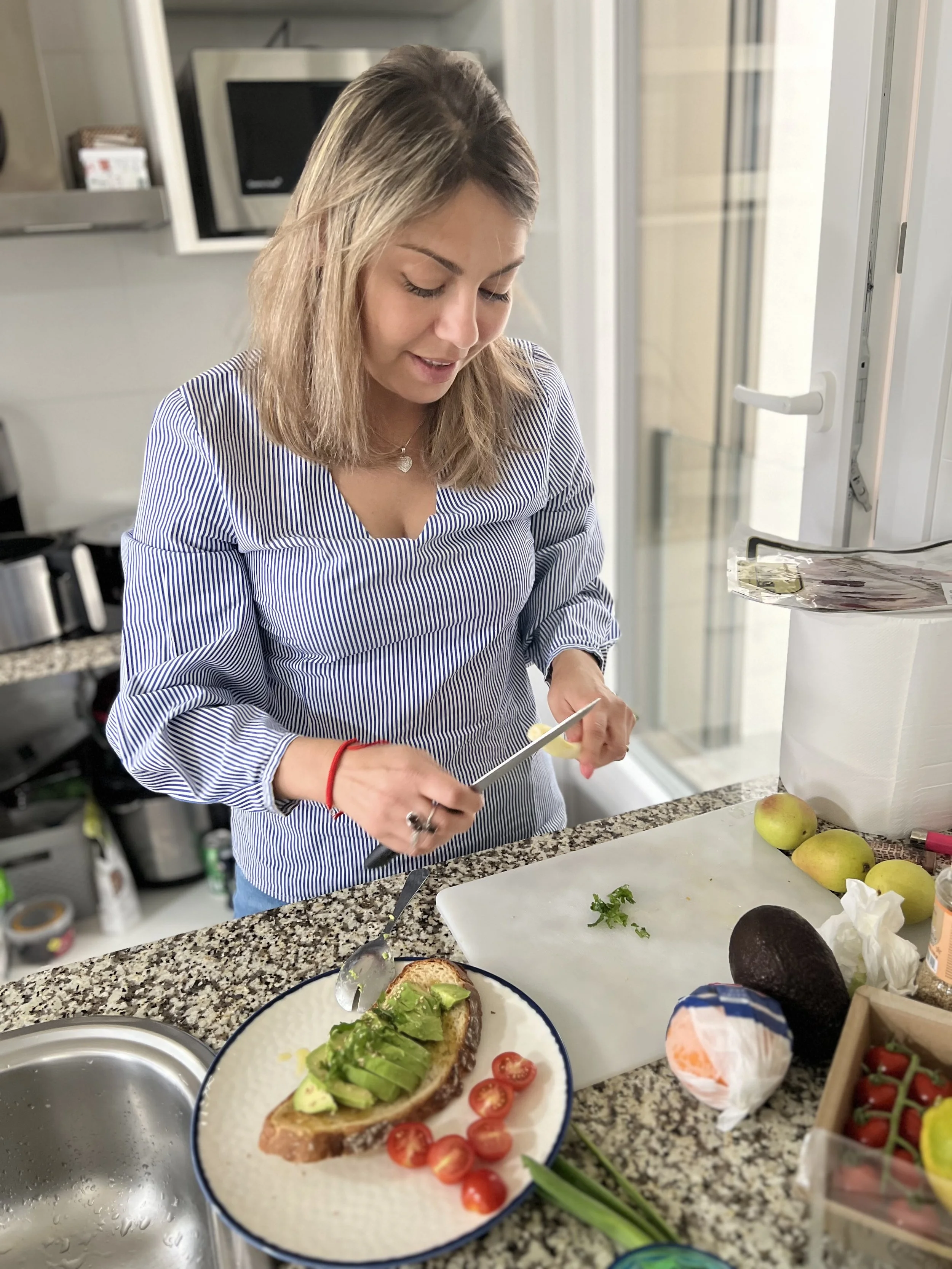
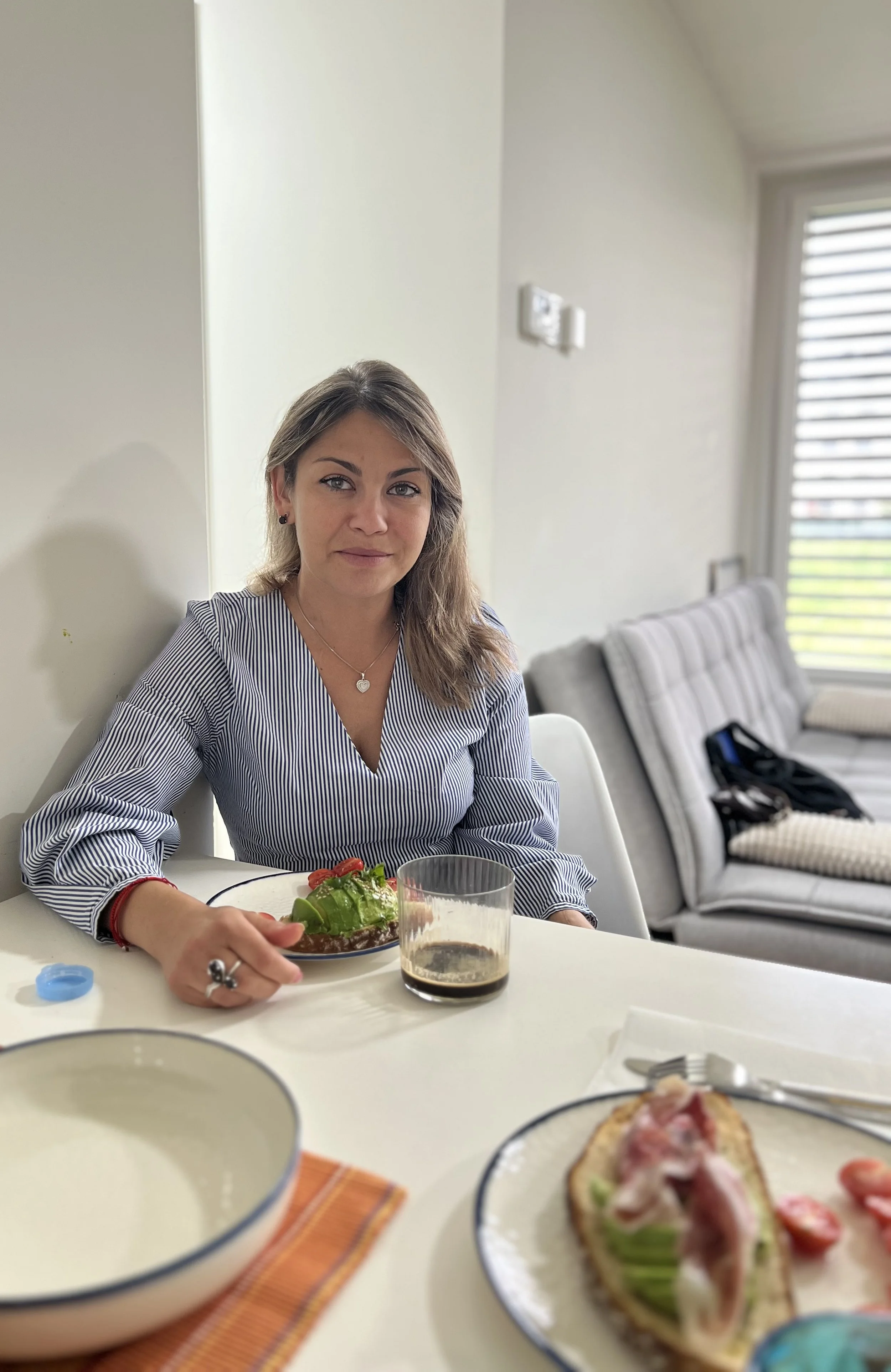
The first time I met Claudia at a café in Plaza de Castillo, I was immediately captivated by her. Smart and well-spoken, she managed to leave me speechless several times as she told me about her life. We then arranged an interview at her home, where she welcomed us with a beautiful breakfast. I could have spoken with her for hours, and I hope our conversation won’t end with this interview.
Good morning, Claudia. Thank you for accepting to be interviewed. I think you have a beautiful and important story to tell.
Can you tell me a bit about yourself? Where are you from, and what was your life like before coming to Pamplona?
I'm from Bucharest, Romania and I'll be 39 this year. I think a lot of people have a certain view of Romania, but to me, Romania is a country with a great capacity for recognizing valuable, capable, and responsible people. I had a wonderful life in Bucharest, both personally and professionally. I worked for many years as a psychologist, I have a Master's degree in Clinical Psychology, and specialized in Ericksonian hypnosis. Later, I spent many years working in the pharmaceutical industry as a division manager for a multinational company.
And what brought you here?
I arrived in Pamplona a couple of years ago. But I actually began a kind of migration before I migrated geographically, so to speak, because I think life itself is a migration. We migrate emotionally, cognitively, and often we also have to cross geographical borders. My journey began when I fell pregnant, and developed an autoimmune disease affecting my kidneys during my pregnancy. When we started considering a transplant and dialysis, I found myself alone in Bucharest with a two-year-old child. So I came here to stay with my family, who had already been living in Navarra for several years.
Can you tell us about your arrival in Pamplona and what that experience was like?
The initial idea was to just come for a couple of months, until my health stabilized a bit, and then return. As I was saying, my life in Romania had always been wonderful, with many challenges but also many beautiful moments. But, as we say in Romania, “The plan you make at home isn't the same as what you find at the market”. In the end, you have to adapt and get used to new situations. It was quite an intense experience because I had to start dialysis right away. Being in a new country, dealing with some serious health problems, and caring for a young child, put me in a state of hypervigilance. For a long time, I was living in survival mode, rather than truly living my life.
When you first arrived, what made you feel welcome and what did you find most difficult?
The specialists and medical staff at the hospital welcomed me with great warmth and kindness, which gave me a lot of confidence. But, of course, beyond the hospital environment, living in a small town and adapting to a different mentality presented quite a few challenges.
How would you say these health challenges have influenced your outlook on life? Because they've been quite serious.
My health issues have definitely come with a heavy emotional load, as well as a physical one of course. But I've had the opportunity to practice patience, and to learn how to cope with uncertainty, because I found myself in a situation that is beyond my control and, in many ways, beyond the doctors' control as well, since every person’s body responds differently to the procedures. Perhaps it's also a personal quality of mine, I tend to approach each situation as a challenge and an opportunity to keep growing. I also feel that coming from Romania, a country with a culture deeply shaped by resilience through many historical changes, has helped me immensely. We have the ability to overcome adversity and reinvent ourselves.
Romanian literature also contains a wealth of works that explore the theme of the initiatory journey. A character goes through numerous situations, faces a series of obstacles and learns many lessons. The goal is not to simply reach a destination, but to transform oneself and gain a different understanding of the world. I believe that this is the philosophy that has guided me and continues to help me move forward each day because, ultimately, I see everything as an initiatory journey.
Without going into too much detail, your health challenges are still ongoing. On top of that, you’re raising a young child as a single mother in a foreign country. There must be days that are incredibly difficult. What motivates you to keep going in those moments? What helps you move forward during the toughest times? I ask with great admiration.
Professional fulfillment has always been one of my greatest motivations in life. But when I arrived here, I encountered a completely different reality. I had to adapt first to life as a mother, then as a single mother, later as a single immigrant mother, and finally as a single immigrant mother living with dialysis and a transplant, which also require a great deal of care. This all caused me a lot of suffering. I could have continued my work as a psychologist, but that required a level of energy and involvement that I didn't have at that moment. So I had to find another way. Now, although I'm not a psychologist in the traditional sense, I still have the opportunity to accompany people and support their personal journeys. That has allowed me to consolidate, to some extent, my new professional identity. As I said before, you have to reinvent yourself; you have to become something of a phoenix.
Then, of course, another important vehicle is my son, in a lot of different ways. I want my son to see me as a fulfilled person, a dignified woman, and a professional, not just as a mother overwhelmed by burdens, financial difficulties, and all the additional challenges single mothers face in a foreign country. Therefore, my need and desire for personal and professional growth is also for my son, because I know it will undoubtedly have an impact on his life and development. And beyond that, what matters to me is that my son lives in a society he feels a part of, where he feels a sense of belonging, where he can contribute his best, and where he feels completely confident to build his life, beyond the label of being a second-generation immigrant.
This brings us to the central point: the association. Your need to create and maintain a professional identity led you to observe what needs existed and what causes you felt particularly close to.
How did you reach the point where you decided you wanted to start this association for single foreign mothers in Pamplona? What did you notice was missing that made you think, "Okay, this could be my new goal"?
As a foreigner here, I encountered all these festivals and traditions that I couldn’t fully understand. And if you don't have a grasp of the landscape or the place, it's going to be much harder to develop a sense of belonging. You arrive and everyone is enjoying the festivities naturally. Few people are going to notice you because you're wearing this invisible immigrant's clothing, and no one is going to explain why things happen or what they mean. Then you start reading and learning, but it's not the same. You have to go out into the street and experience these things for yourself. So I started this journey hand in hand with my son, "Let's go out, let's discover what's out there."
I gradually began to feel that heritage and culture can be an important vehicle for belonging, for feeling part of Navarra which is so rich in cultural traditions. I remember the exact moment when I decided I had to do something, and I had to do it with other people, because I understood that this wasn't a problem that just affected me..
I was doing a training in sociocultural activities, accompanying a group of seniors visiting Pamplona City Hall. Thanks to that visit and the person who explained so many things to me, I felt a little more like a true Pamplonese, a little more connected to what was happening around me. Looking at San Fermín posters from different eras, understanding their symbols, and beginning to connect the dots gave me a deeper level of understanding. It helps you to grasp the rhythm a little better, understand the cultural codes and references, and this helps you navigate daily life much more effectively.That's when I thought, "This is where we start, we use culture as a tool for integration.”
I had the opportunity to start over by choosing something I enjoyed. Of course, there was also a lot of frustration, because in Romania I held a position of great responsibility, and when I arrived here, I encountered professionals who suggested jobs very far removed from my background and training, such as cleaning the streets.
But perhaps that was precisely what had to happen. Because if you could have easily kept your job, you probably wouldn't be doing what you're doing now. Sometimes things happen the way they do because they force you to change direction and discover a new path…
Sure, and it’s the same silver lining mentality I have with the disease. I think I have a certain ability to influence people, to motivate them a little, so using my own journey is something that works.
Another philosophy I have is "meliorism," which isn't just wishful thinking, but rather the mindset that through our own actions, we can always improve our situation. I don't believe in a utopia, nor in a perfect life or world, but I do believe that what we have around us can always be improved. And that it must be done from a position of action, not of passive waiting. And that's how I started the Religa association. "Religa" comes from a philosophical concept, meaning that we seek to unite disparate pieces to form a single unit. From there, we began to design the Amarekin project, which is a sociocultural integration project aimed at single immigrant mothers.
What does Amarekin mean?
In Basque, Amarekin means "with the mother." And as Basque is a very important part of the Navarrese culture, we decided to integrate it into the project to get a little closer to that cultural reality. We chose Amarekin Navarra, because through this project Navarra becomes a mother in a sense, offering support and welcoming us within its territory. And of course also because this project is dedicated to foreign single mothers. It is a 12-months old sociocultural inclusion program of gradual integration, with activities linked to the Navarrese festive calendar.
Who supports you financially to be able to carry these initiatives out?
We are a non-profit organization, so our operating budget is primarily public. We collaborate with various local entities and institutions and are currently awaiting a decision on a grant from the Government of Navarra.
Did you find this process difficult? Do you feel that local institutions value the work you do? And, consequently, do you receive sufficient financial support to maintain the project?
I would like public and administrative institutions to be able to see immigrants not just as people, but also as partners. For me, going from simply being a beneficiary of an aid program to becoming an organization capable of developing such programs is incredibly valuable and exciting. The funding application process wasn't particularly difficult for me. Since I also had some skills from my previous work in Romania, I was able to manage it well. But for an association just starting out, some basic training in this area would be much appreciated. Developing a project, with all that it entails, in order to submit it for a grant is a heavy burden, and we often struggle to navigate the highly specific terminology. There might be an excellent idea behind a project, but if you don't have the ability to translate it into language suitable for the grant applications, that idea can easily be lost.
I've been fortunate to collaborate with an organization that has helped me refine and better structure the project. Thanks to that support, I believe we've managed to present a solid proposal. All the services and organizations I've contacted within the framework of this project have shown interest, both for the potential social impact and for its innovative and creative component, especially the way it combines intercultural heritage with Navarrese heritage.
What kind of impact would you like to see for these women and their children in the years to come?
The project has two main focuses. On the one hand, it aims to introduce the mothers to Navarra's cultural heritage; on the other, it pays homage to the mothers' culture and the traditions of their countries of origin.
Another important aspect is female empowerment and interpersonal development. We work on all of this because we want these mothers to exist beyond the label of "single mothers." We want them to be fulfilled women, that are capable of contributing to society, and that act as role models for their children. My hope is to create an informal support network where they can find friendship and a sense of belonging. By experiencing this space and making it their own, I hope that it can help their children develop self-confidence, embrace the rich cultural heritage of their home countries, and integrate it with everything they experience here.
The goal is to expand and replicate this project. It's a 12-month project, but I hope the mothers will remain involved with the association and become agents of change in their small communities. And this way, little by little, we can grow a more connected, happier community, because ultimately, all of this contributes to personal well-being.
What could institutions and the local community do to support this project?
The Spanish government largely supports the integration process for migrants. When it comes to basic needs, there are many programs that offer solutions. In a complex international, political, and economic context, it's understandable that resources are limited and that it's difficult to respond individually to each situation, but efforts are still being made in that direction. The housing problem remains a significant challenge for many families, but a great deal of work is being done on this. What I believe could be improved is providing a more nurturing environment that allows these people to not only survive but also to thrive. This not only benefits these people, but also the local community.
If we wanted to give a practical example of how the community can contribute, what would it be?
Currently, the Amarekin group only carries out activities with foreign mothers. We want them to feel supported and good about themselves and, later, to be able to integrate into this society and build a support network. We hope the community will be open to welcoming and embracing these mothers, so we can continue building together.
At the end of the year, we have an exhibition planned with the Juárez House of Culture, where we will present all the cultural and creative projects we will be producing during this period. We will also use this time as an awareness-raising activity. The idea is for the local community to easily understand how they can support these mothers.
Sometimes it's about small gestures that can go unnoticed because we all live at such a fast pace, and it's easy to overlook others. You might not realize that a mother has a sick family member back home and is going through a difficult time. And perhaps a simple gesture like inviting her for coffee, or saying, "I'll watch your child for a while so you can rest for an hour and a half," can make a huge difference. Because many single mothers don't even have the luxury of half an hour, let alone an hour and a half. So we're going to offer small, heartfelt suggestions to the community. We're planning an interactive discussion and hope it will be an interesting and enriching experience.
What does home mean to you?
The meaning of home has changed so much for me. I remember my first few months here very well, when I missed my home, my career and everything else back in Romania. But then, when I travelled back to Romania, I missed Pamplona.
There comes a point in the life of someone who is migrating, when you no longer know where home is; you’re not fully at home here nor there and you just keep living like that, divided. Now, home is being with the people you love. It's feeling good about yourself, confident, and relaxed. Today, Pamplona feels like home for me. I remember the first time I started to feel this way was when I started walking around Pamplona and bumping into people I knew, I felt like I belonged.
You're not just a tourist anymore…
Exactly. You belong here.
The last time we spoke, you told me you didn't want to be seen as a victim of your circumstances, of your health problems and everything else. So, how would you like your story to be seen and understood by others? Why do you think it's important to maintain this proactive attitude in the face of all these challenges?
I've worked hard on this, because a situation like mine awakens many personal anxieties. But it's a story of reinvention, a story of not throwing in the towel, of not giving up. In the end, I have a great responsibility to my son, but I also have a great responsibility to myself. It's a life that can't be allowed to go to waste.
What's truly incredible is that in your situation, you have every reason to focus solely on yourself and your son, but instead you choose to focus outwards. It's so inspiring, and probably one of the healthiest ways to deal with these challenges.
The way I see it, a crisis is always an opportunity to transform the vulnerability that comes in times like these into a tool that can help others. At first glance, my story might seem quite dramatic: dialysis, a transplant, at such a young age. But ultimately, every story has its own difficulties. This is mine. There are others who may face greater suffering or more complicated situations, and yet they still persevere.
In the end, it all comes down to reinventing yourself, to shedding the label we often place on ourselves as immigrants. Because if you see yourself only as an immigrant, you end up limiting your own potential, and society can't do all the work on its own. There has to be a balanced exchange, society should support us but we also have a lot to contribute to society. This is where the association comes in. There are women who are in a state of heightened alert, of hypervigilance, who in those moments cannot fully access their inner resources. So, we accompany them, offering them a safe environment to open up and grow.
If there's one thing to take away from my story, I think it's this: keep reinventing yourself and moving forward, because life is beautiful, and it’s our responsibility to make it even more beautiful.
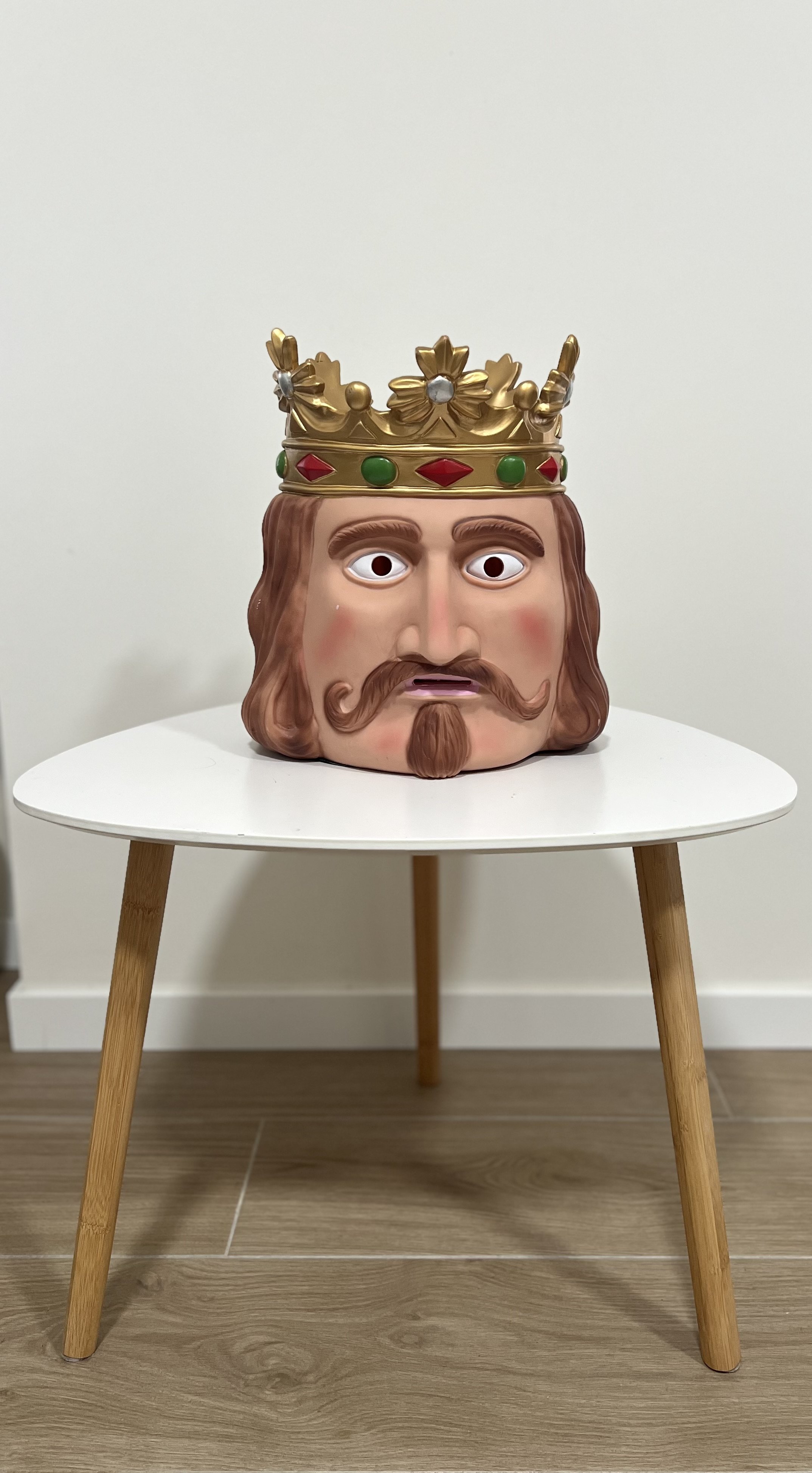
Can you give me some specific examples of activities you have carried out to bring these single mothers closer to the cultural events and traditions of Navarra?
Yes, of course. We had an activity with the Intangible Cultural Heritage Center of the Public University of Navarra, which supports us both academically and culturally. During this event, we had a virtual reality session dedicated to the Privilege of the Union, a historically significant moment for Navarra. The mothers were able to participate in very interesting activities using new technologies in a virtual reality classroom at the university. This way they got to experience the celebrations for the Privilege of the Union with guidance and explanations.
What were their reactions?
Some have lived in Pamplona for 18 years, others for a couple of years, and some for just three months. Many of them hadn't developed a true sense of belonging yet. That's why, when we presented this meeting place for single migrant mothers, the reaction was fantastic. They were so grateful for this initiative, because these are mothers who face many difficulties and complicated emotions, and they have no support network, neither formal nor informal. So this is a space where they can feel welcome. What we aim to do is look at their needs. A single immigrant mother is a mother 24 hours a day, 7 days a week, 365 days a year. She can't get sick, she can't have low morale, she always has to be present and functional.
Therefore, offering work-life balance services with parallel recreational activities for children, and bringing them closer to intangible heritage, is very important.
To give you another example, we organized a trip to Burgui, in the Roncal Valley, to participate in another very important and special Navarrese tradition called Almadía Day. We chose this tradition because it closely resembles our own migration process. Like the rafts, we move forward in a new environment, often without complete control, learning to adapt to the current, sustaining ourselves with what we have and with those around us. Like the raftsmen who travel down the river, we are women who move forward and persevere even when the path is not easy.
I believe that when we experience things firsthand, we internalize them in a different way. And I would like these mothers to not just be receivers, but also become transmitters of that cultural heritage.