FROM THE AMERICAS TO PAMPLONA:
BUILDING A COMMUNITY IN THE HEART OF THE CITY
Roger shares his journey from the Americas to northern Spain, speaking about prejudice on both sides of the ocean, different perspectives on migration, and much more. He has not only found a home for himself in Pamplona, but also created a piece of home for everyone through regular weekly gatherings, quietly shaping the city’s international community. His story is the perfect example of how differences can become dialogue, and how dialogue promotes connection, friendship and belonging.
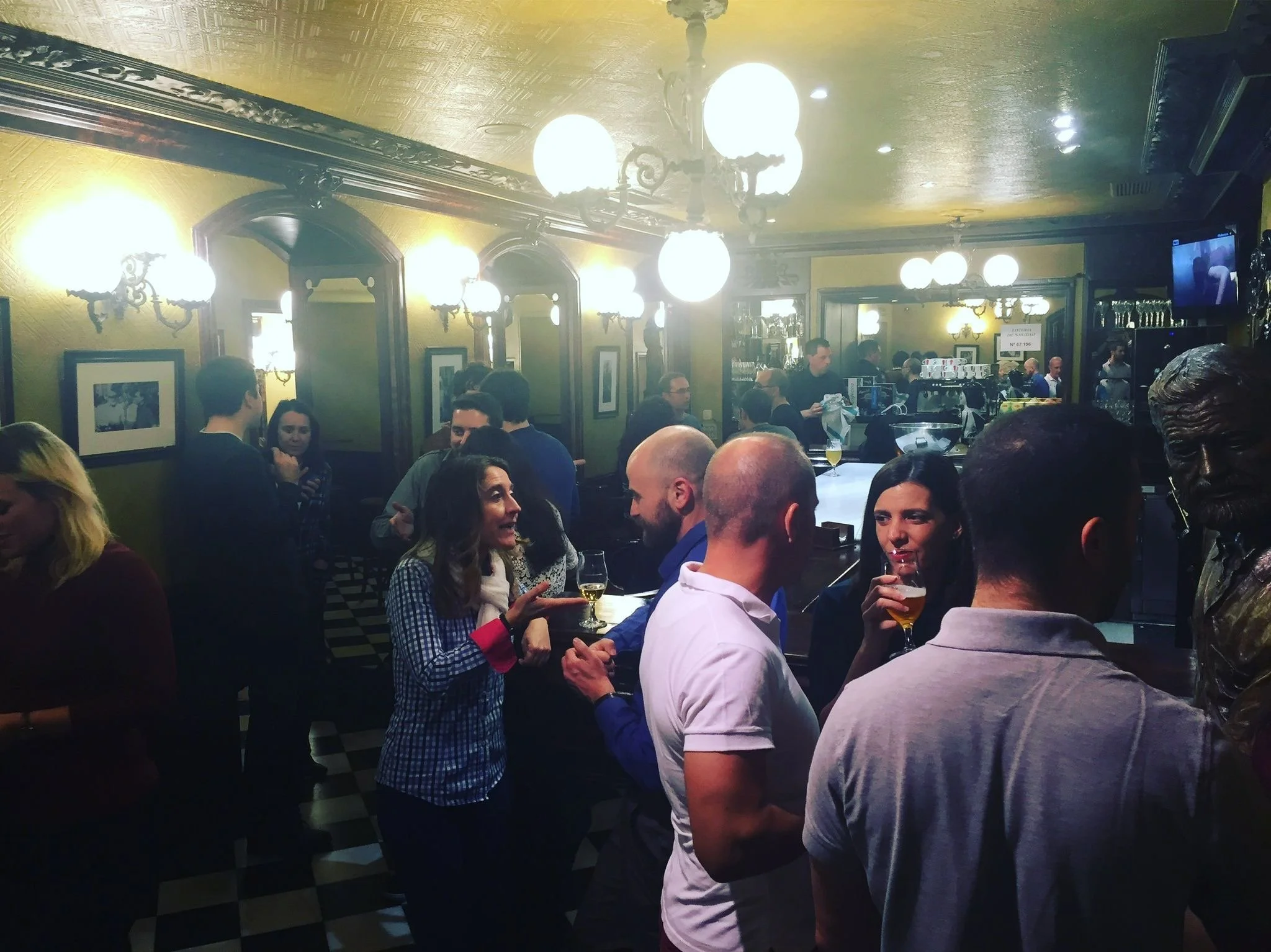
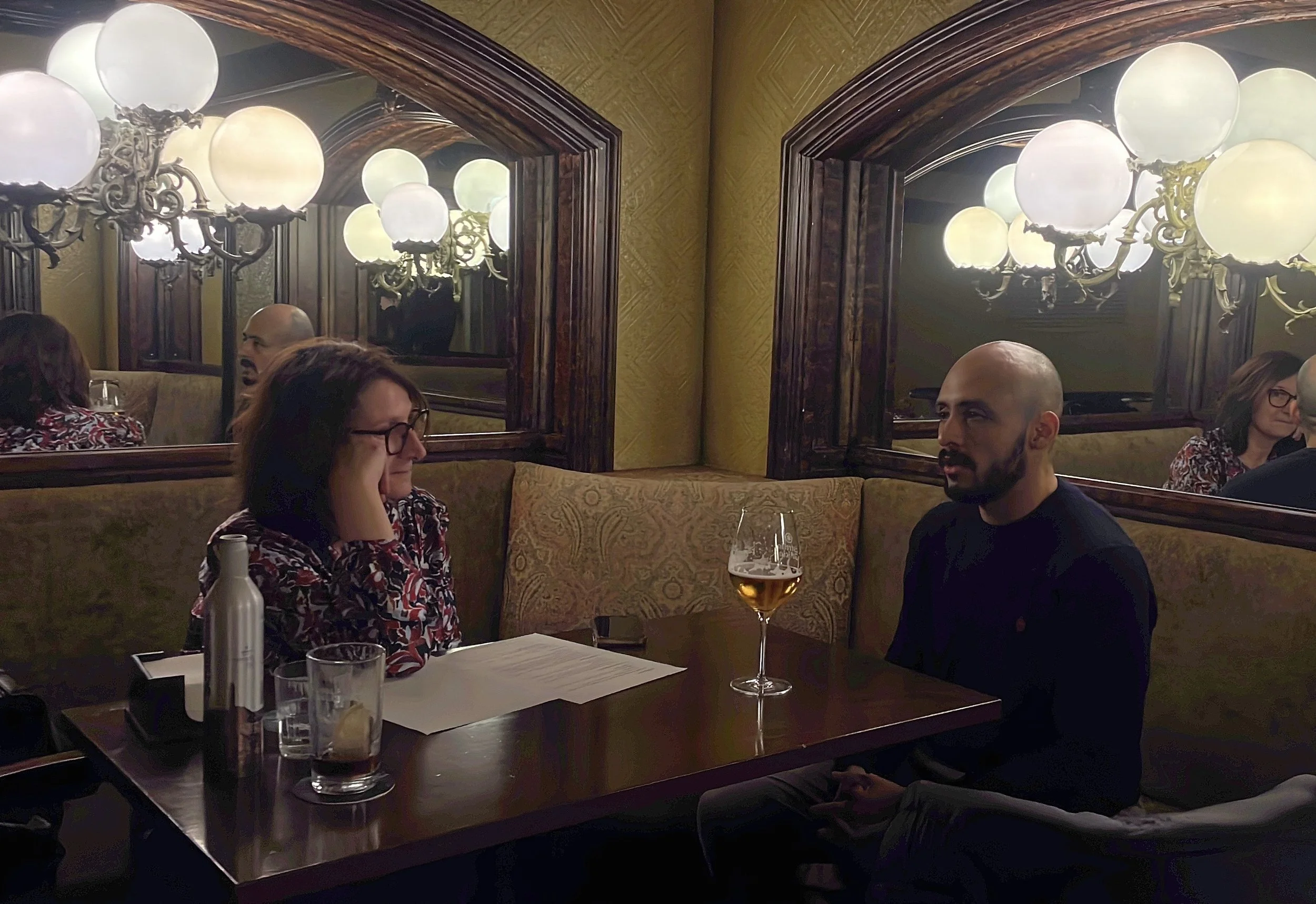
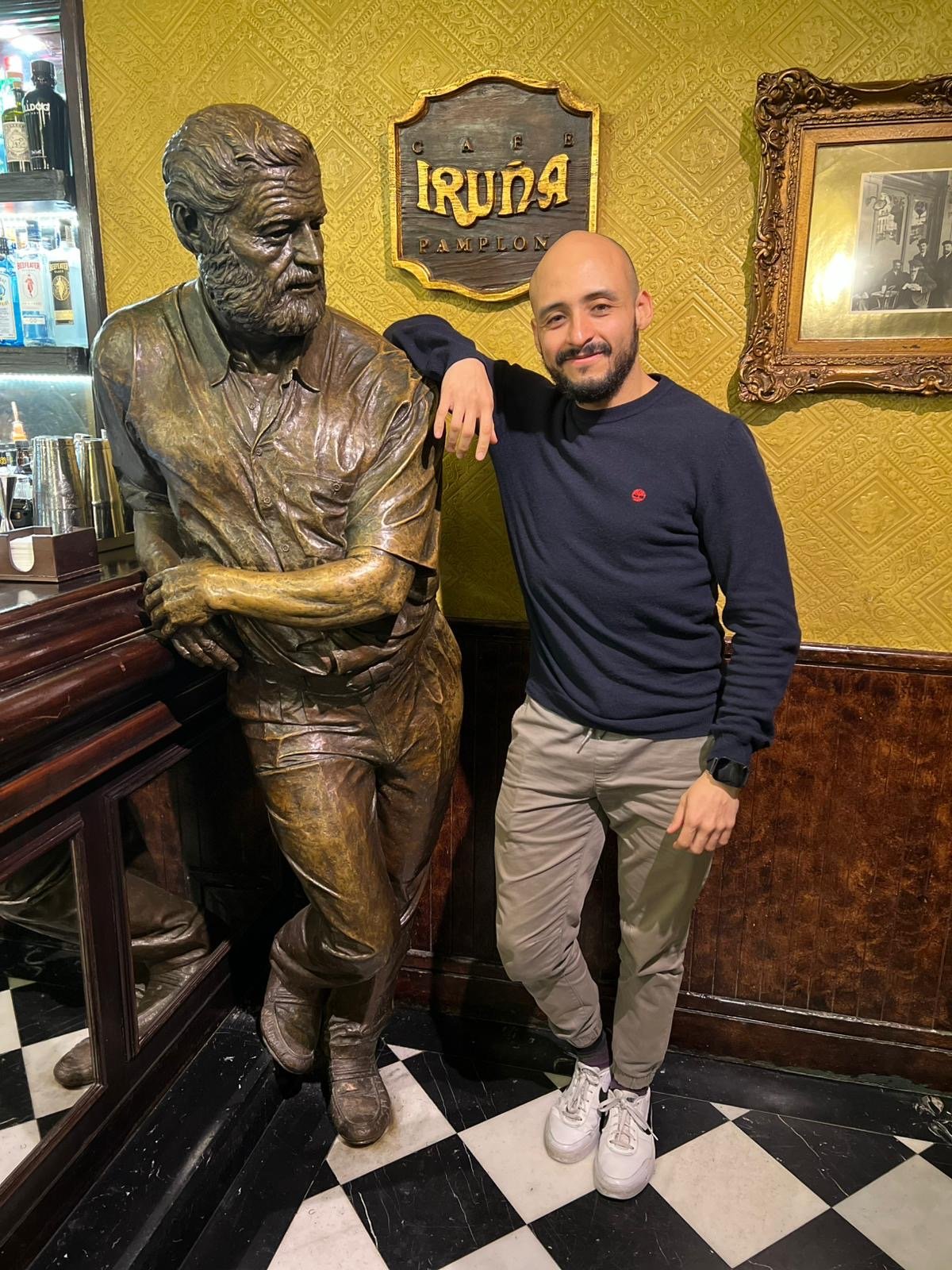
We met Roger Salazar at El Rincón del Iruña, the iconic bar in Plaza del Castillo, at the heart of Pamplona. While we sit at a table upstairs, warming up with a chitchat and something to drink, the background comes alive with the sound of the early evening patrons' conversations downstairs.
You might be wondering why we chose to meet at this location… Well, Roger is the driving force behind the Pamplona Tandem group. Initially born as an English language practice group, this regular Friday evening gathering has over time become a point of reference for many foreigners living in Pamplona, as well as for local people curious about different cultures and wanting to practice English.
So Roger, do you come here often?
Now I only come on Fridays. But I used to come much more often, because of the English group that I am a part of and run, Pamplona Tandem. We used to gather at different bars, but this one holds a special place in our hearts because we had our best years here: the best meetings, lots of people got to know each other, new friendships, even new relationships started here.
And can you tell us how this group started?
It started around 2010, and the idea was to integrate people who weren’t from Pamplona with the locals. This is done in Basque as well, there are small groups of people that get together to practice Euskera. So the person that started this group had the idea to do the same but in English. I started coming to this group just like anyone else, to socialise, to meet people, and I liked it very much. As years went by, the group kept on growing and the person that created it decided to step down and do his own thing. So I took over as the community manager.
When I joined for the first time, I had a fantastic night. What surprised me was that there weren’t just foreigners, but also local people from Pamplona as well as people from other parts of Spain. In my experience, foreigners living abroad tend to hang out in their own bubble, so that was really nice to see… What do you think foreigners get out of these gatherings? And how do the locals benefit from it?
I think that in any language exchange group or, ‘intercambios’ they call it in Spanish, what people get the most out of is the experience of learning about another culture. It's like travelling without leaving Pamplona, because everyone comes here. On a Friday night you can literally be in Australia, New Zealand, the United States, Madrid or Valencia. You can visit different places staying in Pamplona, because the world comes here. I think this is the main benefit. It's also an opportunity for people from Pamplona to practice English, and to open themselves up to new encounters. Pamplona is a very traditional city, many prefer to just hang out with their own group of friends. But I think that it is slowly changing. The new generation especially, is more open to getting to know people from other cultures, without any prejudice, just willing to learn and share, which is beautiful.
Have you received feedback that surprised you about what these meetings mean to people?
Sure, I've heard a lot of comments about how people have met their best friends here. Actually, I was invited to a wedding this year, and the couple met here. I think that for foreigners coming to Pamplona, for people who are trying to adapt to this town, these English meetings mean a lot. I realise that when I see the positive consequences that the meetings bring, some have told me that through meeting new friends in this group, their lives changed.
How do you see this group evolving in the future? Is it still growing?
That's a difficult question, I don't really know, I kind of play it by ear. For me, the most important thing is that we have a community on social media to keep in touch and a place to gather. What I would like though is for the group to hold more activities, let's say pub quizzes or trips. There is already a little bit of that, for example a hiking group born inside the main English group. In the last few years, people have started making their own groups within the group, meeting for things like barbecues and sports. I would love for Pamplona Tandem to be that type of community, one that offers more than just English meetings.
What I think makes it very easy to join is the fact that the meetings happen every Friday, regardless of who comes or not. You don't have to make a commitment. If you can, you come. If you can't, you don't. How many nationalities do you think are here?
Oh, my goodness, it’s like a United Nations meeting, I don't know. Right now off the top of my head, I would say over twenty.
Something I also like is that you find all kinds of people, not only from all backgrounds, but also of all ages. I can imagine that older people new to Pamplona would find it really difficult to find connections, but you can come here and feel completely at ease. It’s fantastic.
Yeah.
So let's talk about you now. How do you usually respond when people ask you, “Where are you from?”
Oh, my God, it depends on the person. When I meet someone for the first time, I have to explain my whole life. I was born in Lima, Peru, but I also lived in the U.S. for a little while. I was living between Peru and the U.S. on and off until I was 16. Then my parents split up and I decided to stay with my mom because I get along better with her. But that contact with the U.S. culture helped me learn English fluently.
And how did you end up here in Pamplona?
My mum was given the opportunity to come here. I was a teenager then, and I had the option of staying in the States with my dad, coming here with my mum, or going back to Peru. But I decided to come to Spain.
And is your mum still here?
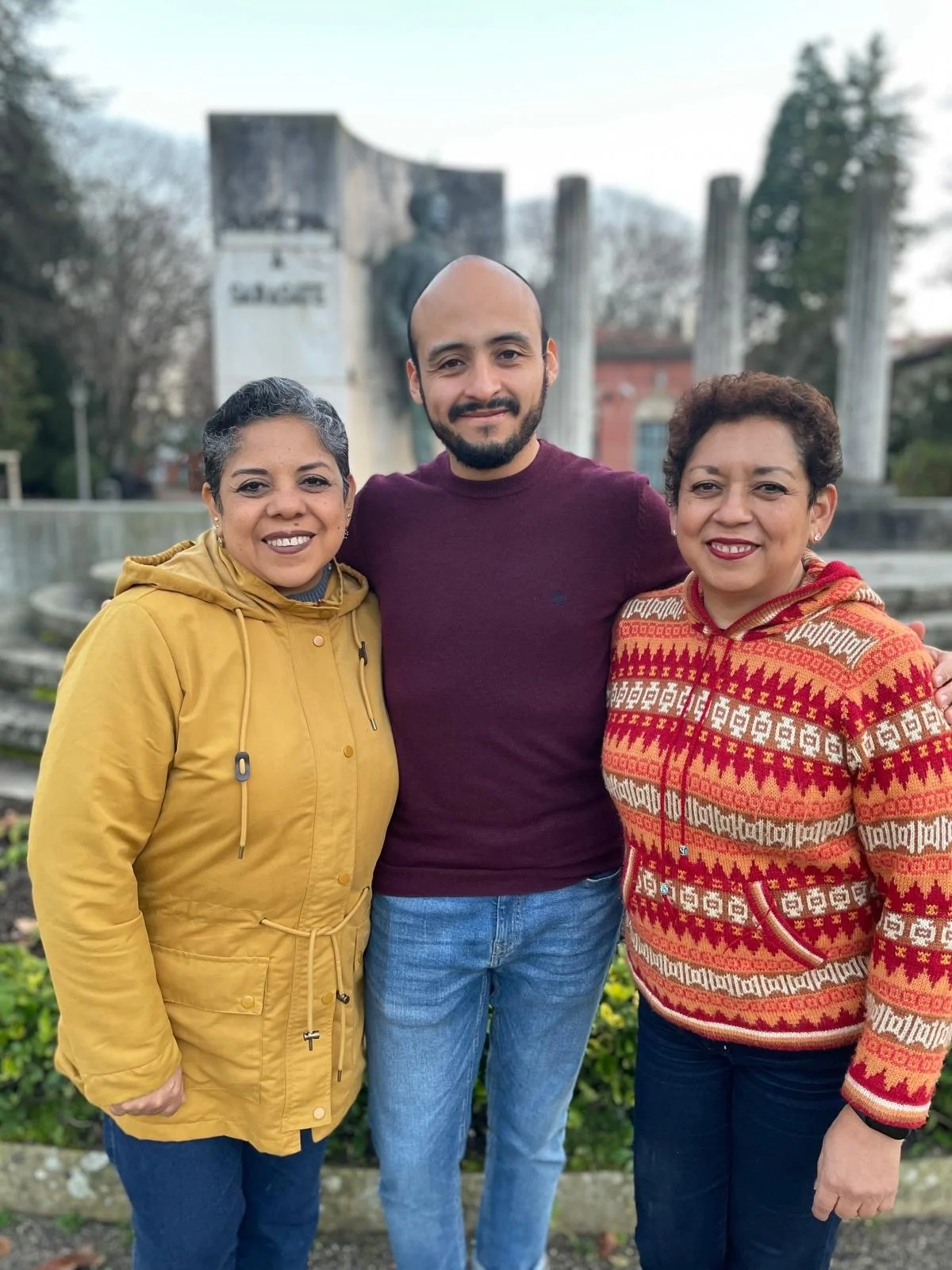
Yeah, we actually live in the same apartment. She's been my main support, it’s thanks to her that I'm able to do all this. My life would otherwise have been completely different. I'm an only child, and she's a single mum, so we have a close relationship. Together with my aunt, and my grandmother who passed away in 2020, they raised me. They are the three pillars of my life.
So where would you say you are from?
I would say I'm from Peru. I never deny that or try to change my nationality. Legally speaking, I am Peruvian and Spanish. I have double citizenship, but I always say I am Peruvian.
Are there moments when you feel more Peruvian or more Spanish, or even American from the U.S.?
I think I am a mixture of things right now. In some aspects of my life I'm still very Peruvian, especially when it comes to food. But when it comes to the way I think about life and the way I organise my work, I think I tend to be more European. I think here people value wellbeing and friendship differently. I feel that sometimes, especially in America, and when I say America I mean the whole continent…
Like it is… Thank you for specifying.
I should say the Americas.
The Americas, exactly.
In the Americas, people can be slightly more materialistic or individualistic. You can find that everywhere, but I notice that here in Pamplona people care more about the way they live, rather than about making money and being rich, or the ‘American dream’, if that even exists. I think they prioritise things differently here.
Would you say that your sense of identity has changed over time?
Oh, yeah, it's a hybrid right now. I don't have one identity. I came here when I was 22, and I'm 38 now. My mindset has changed completely, I'm not the same anymore. So when I go back to visit my family in Peru, they look at me as a foreigner. It happens all the time.
And when you're here, are you also seen as a foreigner first?
Yes, but it depends. Sometimes they don't know where I'm from, they try to guess. I've been given all kinds of different nationalities.
Do you find this a little unsettling?
No, I don't mind it. It's not unsettling, but what I do find a little uncomfortable is when you are put in a certain stereotype. Like, if you are from this country, you do this. If you are from Italy, you eat spaghetti all day.
So when you came here, what preconceived ideas did you face about being Peruvian or American?
Well, there was a little bit of prejudice that I had to face at the very beginning. The first thing I did when I came to Pamplona was study at a community college. I was the only South American in that class, everyone else was from here. So of course I was always pointed at, as the guy who wasn’t from here. And you could hear comments from teachers and people around me, both good and bad, but that was because they didn’t know me. But as much prejudice as there was, there were only two girls in that class, and I ended up dating one of them. I always heard the comment that it's so hard to date in Pamplona…Well, all I can say is that it depends on how you are.
But I have to say, overall I haven't had many negative experiences. For the most part, it has been positive, it’s just that the stereotypes can be a little repetitive. For example, I'm Peruvian so I should know how to dance. I can dance a bit, but that's probably because I'm a percussionist, so I have a good sense of rhythm and tempo, not because I'm Peruvian. I know Peruvians that are terrible dancers.
Some people also think that being from any Latin American country, you come from a sort of complicated background, that you're always struggling. It is partially true, but it depends, you can't generalise. I think people don't realise how huge South America is, and North America, and Central America. Spain is just a tiny country in comparison.
I’d be interested to know what stereotyped ideas, or even prejudices, did you have about Spain before moving here?
Honestly, I came here being completely ignorant about Pamplona. Because I had no connection to Europe or Spain, I just didn't know.
But I would say that when Latin Americans talk about Spaniards, the focus is always on the 'conquistador' aspect. Anytime they meet someone from Spain they say things like "you came here to steal our gold." I think it's all about acknowledging the historical part. Lands were never conquered nicely, and there is nothing to be admired about the ‘conquistadores’.
However, I remember one of my Spanish students who went to Peru as a tourist, and replied, "I wasn't on that ship, and I didn't come to steal anything. I'm visiting your country because I have the utmost respect for your culture."
There’s a lot of history behind it, and it’s undeniable that what happened was terrible. It’s important to acknowledge it with respect for all the people who suffered as a result of it, and then move forward and build bridges from that point on.
Exactly. There is unfortunately nothing we can do to delete that part of history. But we also have to be aware of how history is told… Pamplona is actually a Roman city, it was a Roman military settlement, but I never heard anyone in Spain accusing an Italian of being a ‘conquistador.’
Are there any other things that people say about migration that you find frustrating?
Well, the same old argument, that all immigrants are here to steal jobs, or that all immigrants make this city more dangerous. People tell me that to my face, I don't know if they realise that I am also an immigrant. I'm not here to steal your job. I'm a freelancer, I work for my own clients and my own money.
I think it's just the fact that people have the wrong idea of immigration. Being an immigrant is not automatically connected to being a criminal or someone that does any harm. We’re just people leaving our countries looking for better opportunities. We've all done that. And I think, especially in Spain, people forget that many Spaniards did the same during the Civil War. They were also immigrants. In fact, in 2009 during the recession, there were some local people migrating from here to the UK. I remember one guy from the group saying, “I'm not an immigrant. I'm going to the UK, but I'm not an immigrant.”
Because the word ‘immigrant’ has a negative connotation…
Right, but for the British, he is an immigrant, you know?
It's a matter of perspective…
Exactly. I think the term immigrant has been denigrated somehow, but we are all immigrants at the end of the day. It’s important to talk about it, especially now.
Where do you think these negative connotations of immigration come from?
I think the misconceptions about migration come from people that have never left Spain or Pamplona, or their own place. Or people that don’t travel much. They don't know what it's like to have to leave your country. And I see it now in Pamplona, there are more and more Americans coming to Spain not for a visit, but to stay.
And which Americans are we talking about now?
North Americans from the U.S., American refugees. They are also looking for opportunities here, looking for a place to stay. They are doing the same thing any other immigrant does.
Absolutely. Now I wanted to ask you about language. Unlike many other immigrants, you didn't face a language barrier when you arrived here. But what would you say are the differences between Spanish from Spain and from Peru?
Well, there is a bit of a Peruvian accent. It's not as recognizable as some other accents, but it's there. We also use some different words, we name things differently. There are people that mock the accent, like “ Oh, you said this and we say it in that way.” But who cares? I don't. As long as you understand what I'm saying, that's it. So for me, despite the fact that we're talking about the same language, I do feel like I'm speaking a different variation of Spanish. So when I speak Spanish from Spain, I use different words than I would speaking Spanish from Peru. After all this time, I’ve learned all the expressions from here.
So when you speak to your friends or family back in Peru, you speak...
A mixture of things. But that's because I haven't been there in a while. If I stayed there long enough, I would probably gain those words back.
So since language wasn’t a big challenge, what were the main challenges in adapting to life here?
I would say it was blending into society. Pamplona is a very traditional city, attached to its roots. Everything is built around San Fermin and the different festivities you find in the various towns and villages. That was the most difficult part for me, because I'm a city guy. And although I don't miss living in a big city, I do feel it has affected my mindset. I think coming from a small town or village definitely gives you a different perspective on life.
How do you think Pamplona has changed over the last 15 years?
I’ve noticed that this city doesn't really change that much. I say this to everybody that comes to Pamplona; Navarra and Basque Country have this peculiarity, change is slow, glacially slow, let's say one millimetre per year. Pamplona is, compared to other European cities, still a baby.
I agree, I think Pamplona is still quite authentic. With the exception of the week of San Fermin of course, there's no overtourism, just the beautiful tourism that comes through the Camino. I really like the fact that it's not contaminated by all these chain stores that make you feel like you could be in any city in the world. Here, you know you're in Pamplona.
Definitely, I don't think that's going to change, at least not for the time being. I have the utmost respect for Pamplona's culture, and I'm not interested in changing it. If anything, I'm interested in joining and enjoying it, in becoming part of it. Maybe because of my own humanity, I'm adding some variety, but I wouldn’t want to change or cancel anything. Pamplona is never going to be like New York, Rome or even Barcelona. If it was I wouldn’t be living here, I’d be only visiting.
What do you think has become ‘Pamplonese’ about you?
What I'm going to say I want in capital letters on the blog.
Okay, let's do that.
First of all I would say, REAL FRIENDSHIP. It's very hard to make friends here, but once you do, that is real friendship, real support. On the other hand, the most important thing I’ve learnt here, coming from a South American and American background, is the respect for women. I think in America, North, Central and South, women were not as respected as they should have been. There was a type of macho attitude, where it was normal to objectify women. That changed immediately when I started not only getting to know people from here, but also dating. My first girlfriend from Pamplona, she taught me a very important lesson. I'm not a perfect person, but I try to treat everyone equally, without that sense of superiority that I think you can still find in some cultures.
What does feeling at home mean to you?
I consider Pamplona my home. I haven't been to Peru for almost eight years. When I go there, I also feel at home, but not as much as here. So I'm kind of divided in that sense. For me, going back to Peru means going back to what I remember as a child and as a teenager. But for me, home right now is Pamplona. But then again, as an immigrant, I think our lives can change quickly, so who knows what comes next?
Do you think that these Friday meetings help us feel more at home here?
Oh yeah, absolutely. You probably heard this word in Spanish, ‘cuadrilla’, a group of friends. As much as I don't want the English group to be a cuadrilla, it feels like one, but a more open one. So yes, I think it helps people with their sense of belonging, definitely. Someone from the group once said, “I'm in Pamplona Tandem, I am a Tandemier.” They coined a new term, I like it!
I love that when someone comes for the first time and looks around, trying to find the group, there's always someone else that notices that and invites them to sit down.
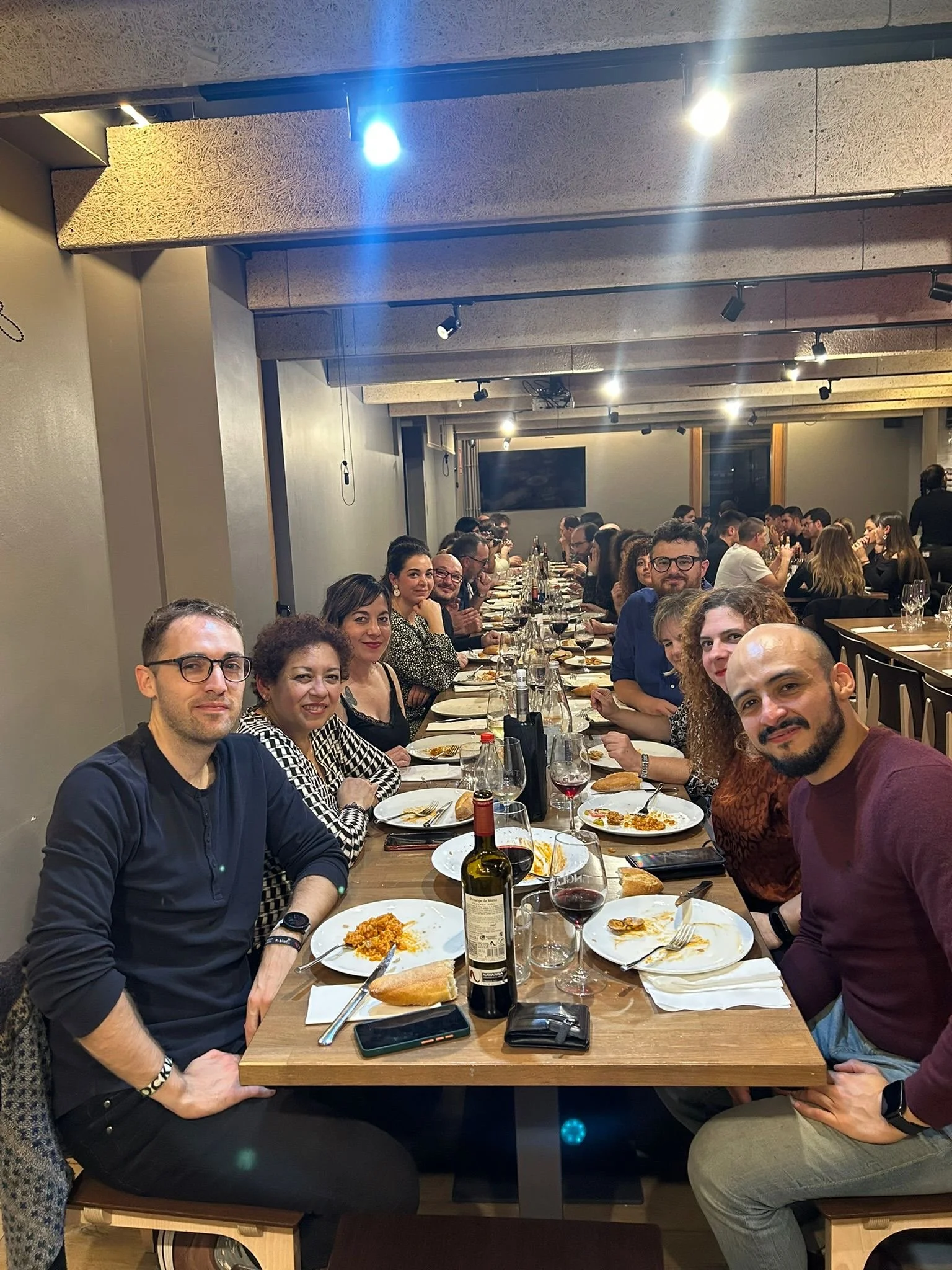
Some Friday nights this bar is so crowded, it's very hard to know who is from the English group and who isn't. There are people that ended up meeting someone that wasn't from the group, that happened to speak English, like tourists. That happens all the time actually. Let's say that in a way we are a huge ‘cuadrilla’ and we have our own little house in the tree, which is this bar.
Is there anything else that you would like to add that would be important either for newcomers in Pamplona, or for ‘Pamplonese’ to know in terms of what can help make people feel comfortable in a new place?
The main purpose of Pamplona Tandem is English learning. The social part is, let's say, a benefit, a perk. And one thing that everyone needs to understand is that the only way to improve is by speaking the language, not by just studying it. The main point is to try to find the opportunity to talk and communicate. Regardless of the mistakes you make, that really doesn't matter, it’s the best way to practice. I think that’s a mindset that many people, not only in Pamplona, but in Spain in general, need to change. The way people learn English here is a little bit old-fashioned because it's mostly grammar-focused. The communication part is definitely left behind, because it's all about getting a certificate or a better job. What about just talking to someone about their day rather than, you know, climate change or investments?
Definitely, I like that perspective. On that note, it’s time to wrap it up. Thank you for this conversation, it’s been really nice.
Do you have enough material?
Plenty, I'm very happy, it's been very interesting.
I'm glad to see that you guys are enjoying the group as well.
Of course, for me it has enormous value. I don't come here for the English, I come for the connection and the cultural exchange. And I love the fact that there are local people, they probably also find a little piece of home here as well.
Right, everyone feels comfortable in this group, that's why I keep doing this.