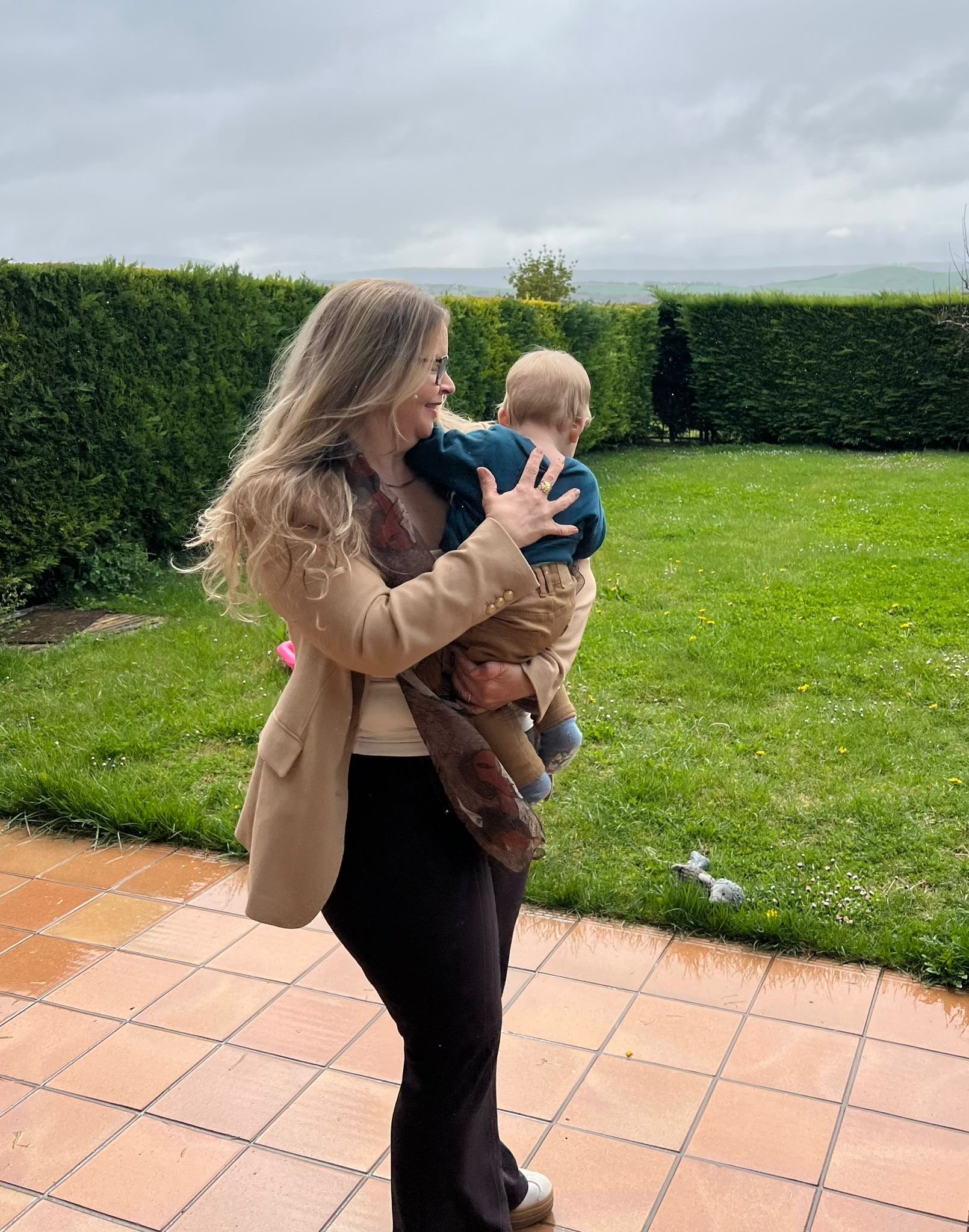
MOTHERHOOD BETWEEN CULTURES, SHIFTING IDENTITIES AND BEING SEEN BEYOND STEREOTYPES
In this intimate conversation, Desirée shares her life between two worlds: her professional identity and her role as a mother, her past in Brazil and her present in Pamplona. She describes the emotional weight of raising a family far from home, reflects on the multifaceted nature of identity and on the many different ways we can belong somewhere.
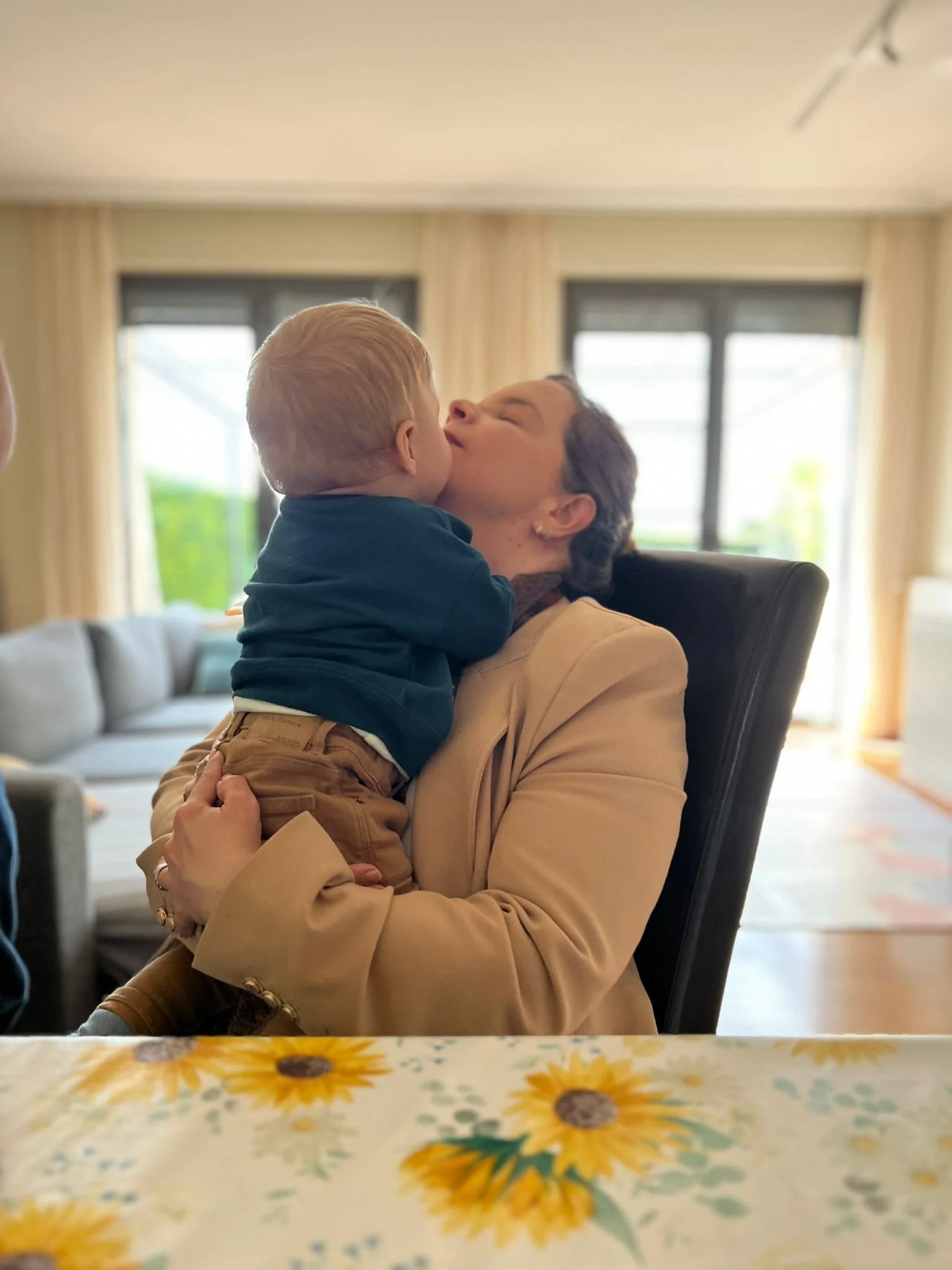
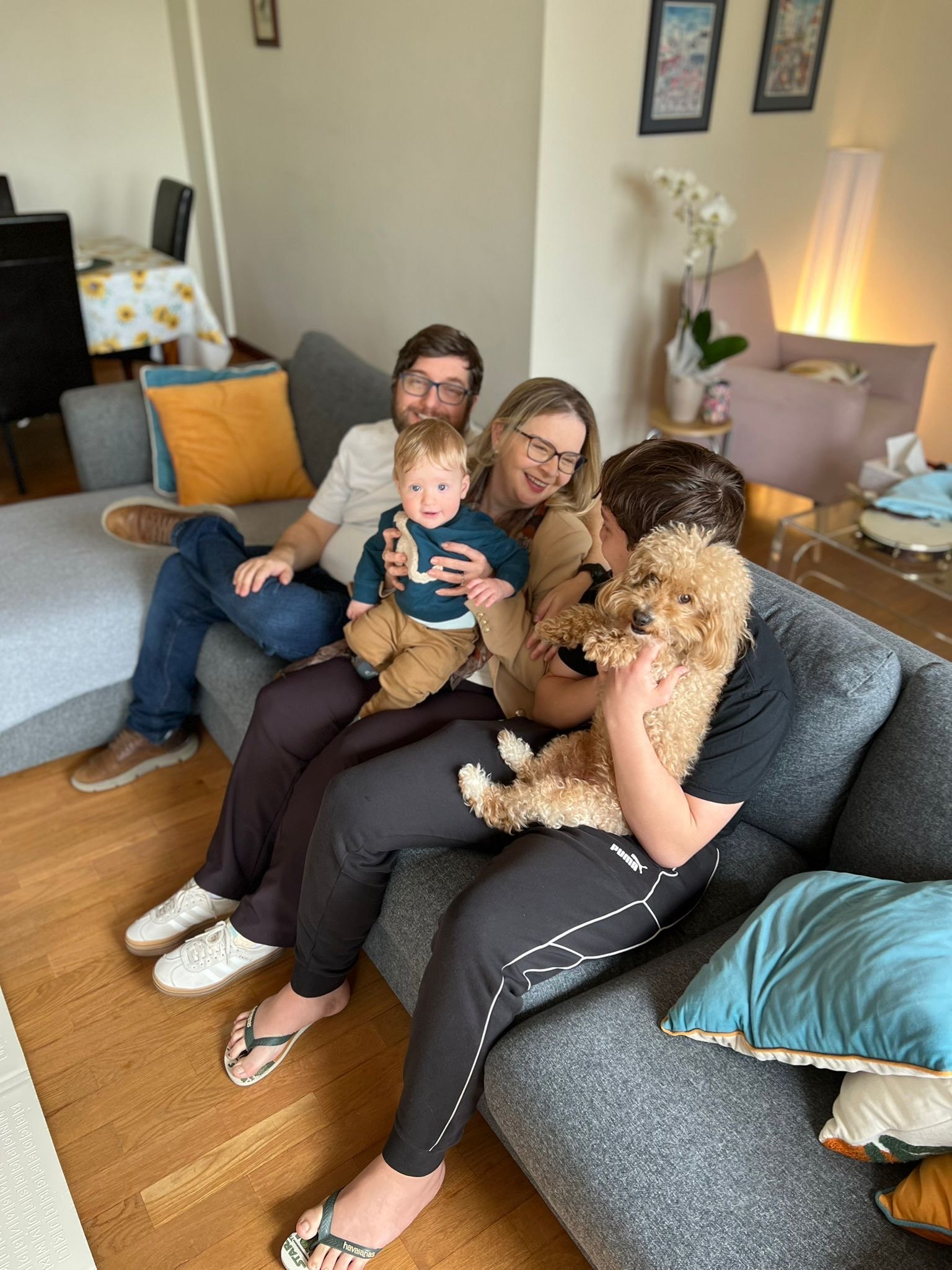
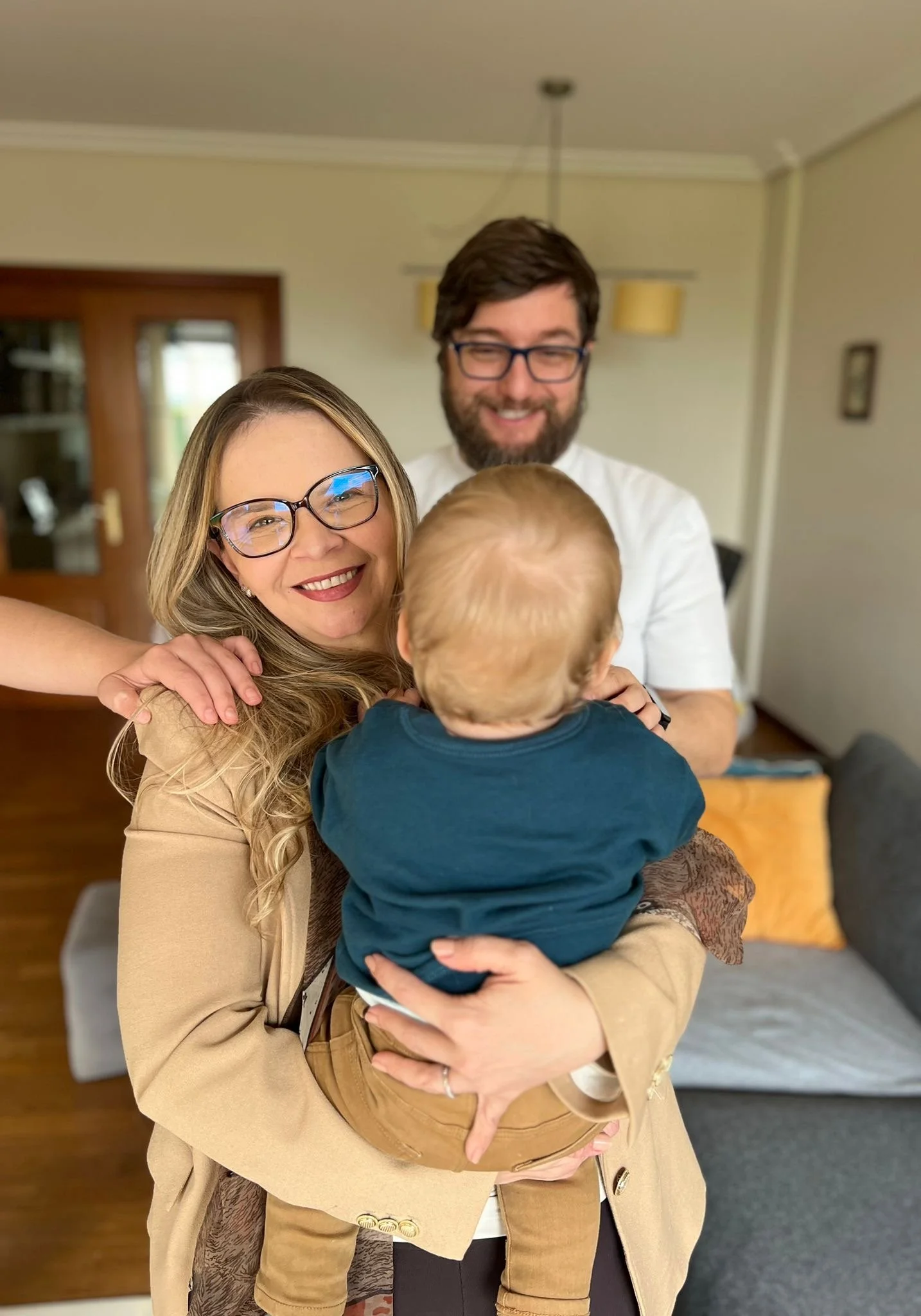
Desirée and her family welcomed me to their home on a chilly but sunny Sunday morning in March. We warmed up with coffee and a selection of pastries, each carefully sampled in the noble quest to find the best… which ended with us almost polishing off the lot without reaching a verdict. All this was happening under the amused gaze of a 9-month-old baby, giggling from his mum’s arms, a cozy warm-up for our conversation to come.
Hi Desirée, we're here today for another interview, thank you for joining me. Can you tell me a little bit about yourself?
I’m Desirée, from Sao Paulo, Brazil. I’m a psychologist, and a mother of two, and I’ve been here in Pamplona for almost four years.
And what brought you here to Pamplona?
Oh, it’s a long story. When the pandemic happened four years ago, Brazil took it hard, it was a difficult time.
Our oldest son was growing older, he was 12, and we really wanted him to have the experience of living abroad; to meet other people, to learn another language. We actually lived in Pamplona back in 2010, and since both my husband and I work online, we decided to come back here. We had friends here, and we love the city, so we thought to ourselves, why not move here for a few years so our son can experience it, and after a few years we’ll go back to Brazil. That was our plan.
Tell me about your children, you have two boys…
Yes, I have two boys. One is 16 and the other is nine months.
Quite a big gap…
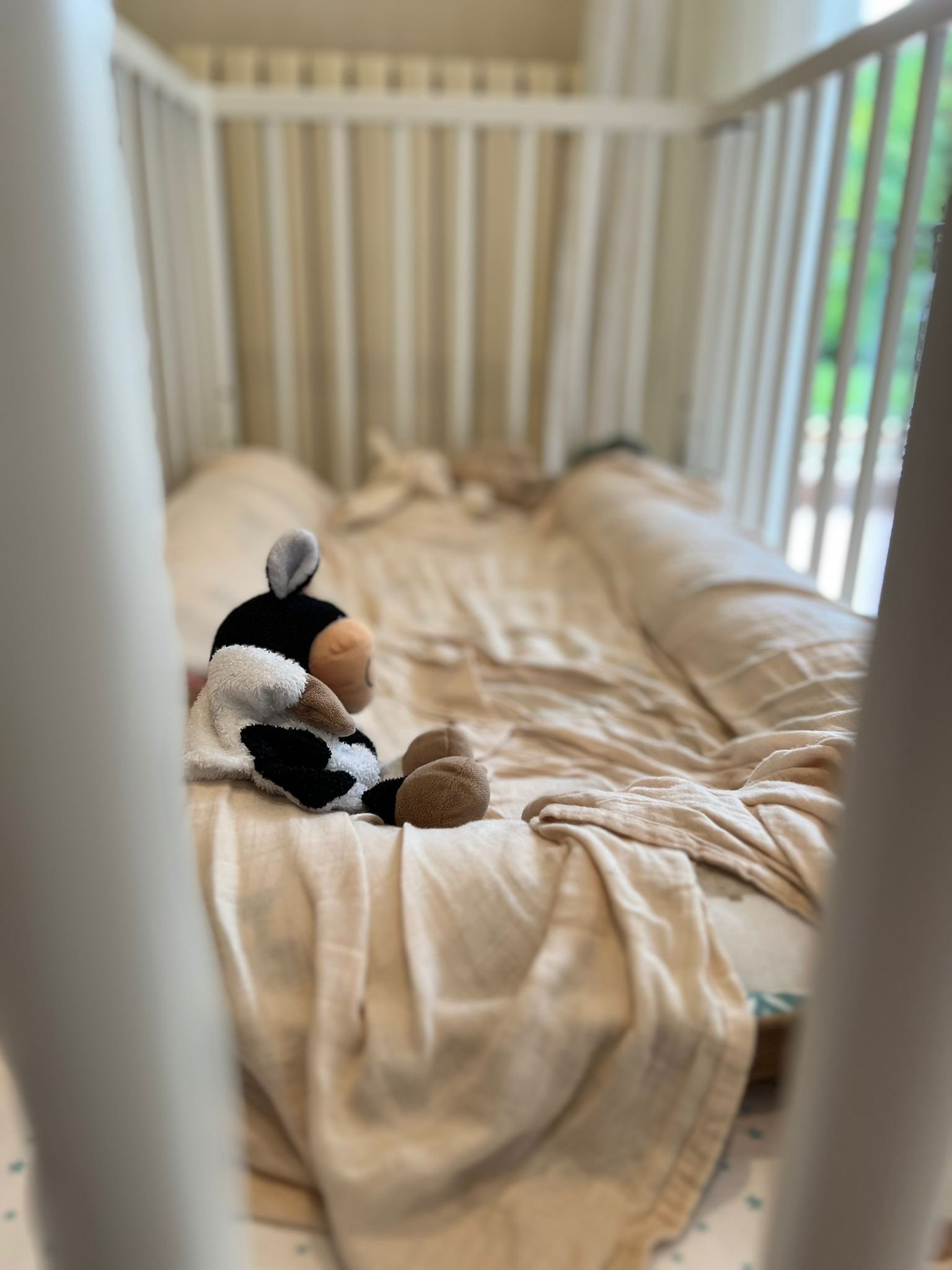
Yes, we actually tried for almost 10 years, we went through a lot of treatment in Brazil. After all that time we had given up on the idea of having another baby. But after two years here in Pamplona, I started to have dreams about a little boy. I don't know if you believe in magic, but I do.
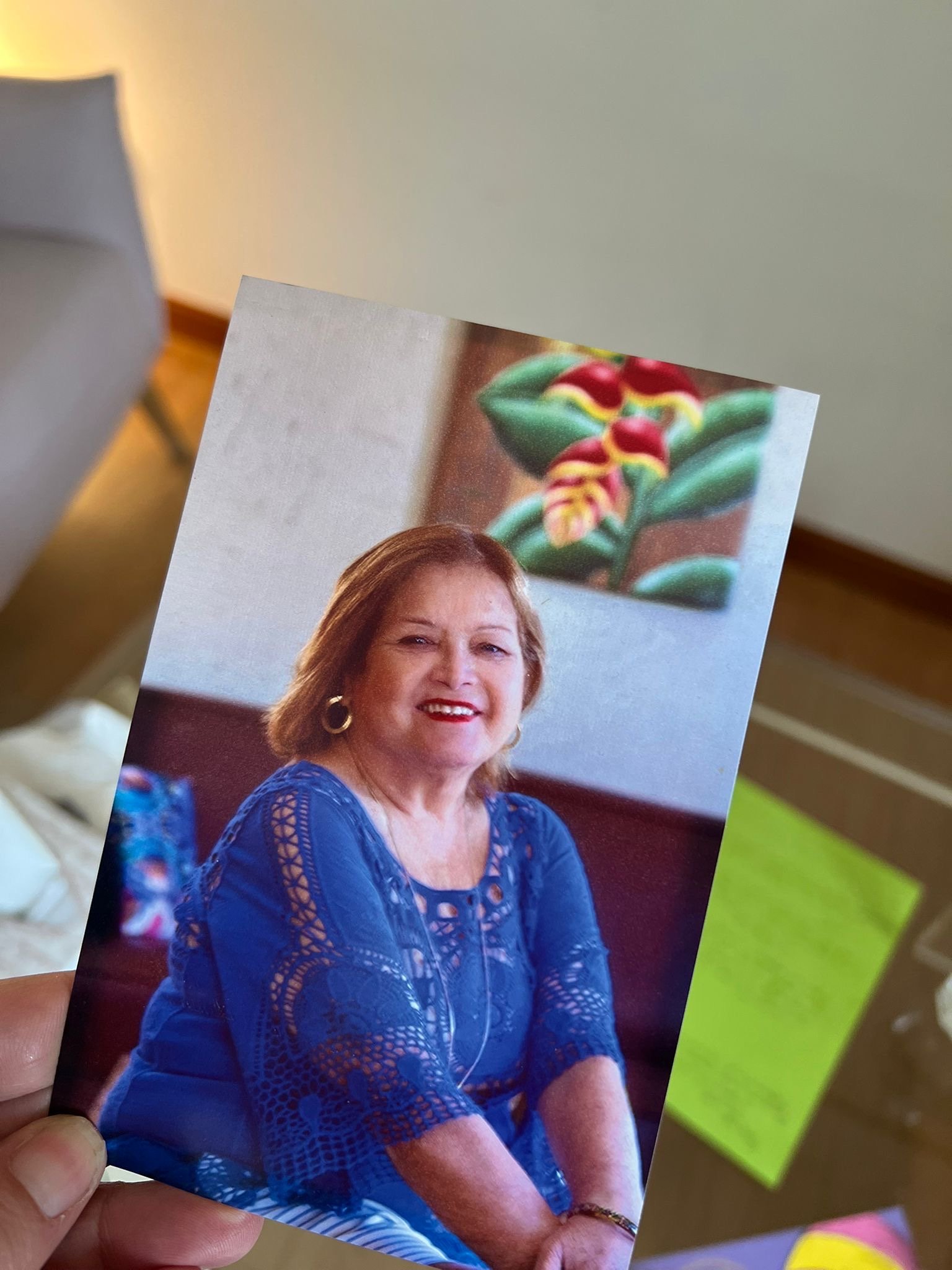
I started to have dreams about my mum, who had passed already, of her giving me this little boy. So I told Rodolfo, maybe we should try, just one more time. At first he said no. We were so traumatised by the past experiences, so much disappointment. But in the end we decided to give it one last try.
And we did, and now we have the second one.
So the second one was born here…
Yes. He’s Pamplonese, a ‘Pamplonica’.
That's right. So even if it was just for this one reason, it was a very good idea to move to Spain, right?
Yes, exactly. Now I know why I came.
So your first son was raised mostly in Brazil, while your youngest was born here. They are being raised between two cultures, in a Brazilian household but living in a Spanish environment. How does that work in your family?
You know, something that has happened to me since I moved is that I feel even more Brazilian, I don't know why. I feel prouder of my traditions, of our songs, of the way we raise children. We, as a family, keep doing what we always did… We cook and have dinners together, we clean the house together, we travel together. We speak Portuguese, and read our news. We listen to Brazilian music, and podcasts in Portuguese. So we live in a sort of little bubble, which is not necessarily good, but that's how it is. What is interesting though, is that our oldest is the one that brings Spain into our home, he is like a window into Spanish culture for us.
What differences do you see between parenting in Brazil and parenting here in Spain, in Pamplona? And how do you balance the two ways?
I think Pamploneses are stricter with their children. Very caring, very loving, but stricter. While in Brazil, we’re softer…
Especially with the youngest, I have to prepare him to live with the Spanish, under the Spanish system. But I really want to give him both sides. So he will spend a couple hours with the Spanish teachers and the ‘guarderia’ and their way of doing things. And when he comes back home, we'll be speaking Portuguese and singing our children's songs, and I'm super okay with that. I think that our life becomes bigger that way. Of course, I would love to be more integrated into Spanish society, into the Pamploneses, but I find it hard. I've been trying a lot.
What do you find hard? What do you think makes integrating into Pamplonese society difficult?
I’ve been here for four years, and I still have very few Pamplonese friends. I don’t know, it’s hard for me. I feel insecure in my relationships with them, I don’t feel that I am completely understood because of my Spanish… This is definitely a point of pain for me, it’s not easy.
That's interesting. Do you think that there is a different level of investment in these friendships? Meaning that maybe you need these friendships more than the average Spanish counterpart does? Because they're more established, they have the support, they have full lives and you are like an extra in a way?
Yes. Exactly. I'm available every weekend. As I don't have any family here, I can have Sunday lunches and breakfast and brunches. But they are very connected to their family, to their ‘abuelos y abuelas’, which is super nice. But at the same time, I feel that it's very hard for them to open a space, to make room for me.
Do you think it would be the same if the opposite was happening? If you were in Brazil and you had people from Pamplona living there seeking connection, do you think they would find the same kind of difficulties? Because you would be in your home environment, playing the home game, right?
Good question…
And I can tell you something more. This is not something that is specific to Pamplona, it's something that generally happens when there are newcomers in a place, in a group of people that are established. There's always more need on the side of the people that are new and isolated.
It's hard for me to answer you because since I've had this experience, I'll never be the same. Now, every time I look at someone that feels like an outsider, or maybe doesn't know how to speak perfect Portuguese in Brazil, I try to help them.
Because you have a new awareness that you didn't have before. So sometimes we can't even say that it's a matter of how people are, but what their experiences are and they're not being exposed to this situation. It's difficult to put yourself in someone's shoes sometimes if you don’t put the focus on it.
Exactly.
And I think that's also the reason why we're doing these interviews. I want to give people a platform to talk about themselves, to feel heard and represented, both with their struggles and happy moments. But I'm also hoping that those who read or listen to these stories, can also find motivation to reach out with a helping hand.
Yes.
What has been so far, apart from the baby, the most beautiful and rewarding part of your life in Pamplona?
Oh, there have been many, many beautiful parts, especially my friends. I have found beautiful friendships actually. People that I can rely on, that would answer my calls in the middle of the night.
So if I say home, what do you say back to me?
I would say family. Home is my dog, my sons, my husband.
So does that mean that you feel 100% at home here?
That's a difficult question to answer. I think I've never been 100% anywhere. I think I've always been somewhere else with my mind.
You’ve just returned from spending three months in Brazil, and you mentioned earlier that it was healing… if you’re happy to share, what were you healing from?
Well, I’ve started to feel that I'm leaving the status of being an expat, someone here temporarily, and becoming an immigrant, staying here long-term. And this is hitting me really hard. I feel a lot of sorrow, I feel grief; Grief for the life that won't happen in Brazil. Since my youngest was born, I’ve been grieving the lack of family here. I was missing my family, I was missing the warmth of the weather, I was missing my friends, I was missing my father, my sister. I was missing the people.
And do you think these feelings are connected to raising a new baby away from your family? Because typically, most people have some family support when we have new babies…
Yes, absolutely. When my first son was born and I came home from the hospital, I had like 15 people waiting for me; aunts and cousins and my mom, dad, everybody was there.
This time, when we came back home, it was just us, our dog and our oldest who came home a little bit later because he was at school. So it was like a normal day.
And how did it feel?
It felt sad. It was special because it was a miracle, we were living a miracle, but it was also really difficult. It's something that I have to breathe deep to try to incorporate into my experience.
Do you ever worry that your children might grow up to always feel in between cultures, to never feel like they belong somewhere? Especially now that you have experienced some of that yourself.
Yes, I do think of that. When raising a child, we worry about so many things, and this is one of them. I think the thing I worry about the most is that one of my children will stay here, and I will go back to Brazil, or vice versa. That is the worst thing that comes to my mind when I think about it, because it’s something that could really happen.
Yes definitely, I’ve had the same worry. But the reality is that, the same way we did, our children have every right to do whatever they feel is right for them. So it could well be that they move away from us. Actually, it is to be expected unfortunately.
Would you say that belonging is more about culture, about language or about relationships?
It's totally about relationships. Belonging is a relationship. It's talking to each other. It's receiving a phone call. It's giving a phone call. It's going to buy some bread and talking to the people around you. That is belonging, for sure.
So, where do you belong?
Oh my God. I've always tried so hard to belong, even in Brazil. And I'm trying hard here, but I’ve realised that I have to make peace with this feeling of not belonging. It's okay to feel like you don’t fully, 100% belong.
What moments make you feel that your family does belong in Pamplona?
I think when we’re walking on the street. Pamplona is beautiful, it's very walkable and just a beautiful place. So whenever we walk around, whenever we go to the Casco Viejo, or when we’re watching the fireworks during San Fermin, having some pintxos…Whenever we’re meeting our friends out, even if it’s our Brazilian or international friends, then I feel that we belong.
So when sharing life with the local people, whether it's direct or a bit more indirect, that’s when you feel like you belong…
Yes, exactly.
Have you ever heard any generalisations or stereotypes about Brazilians coming from locals here?
Yes, of course, I've heard some things. Actually, whenever we say that we are Brazilian, people get like, “Oh, Brazilians”. And it feels weird when they say it… you never know what Brazilians will look like.
Oh, they say that because you're fair, right?
Yeah, it's a physical aspect that surprises them. Once I was listening to your podcast and one of your guests said that she had the right accent. Well, sometimes I feel like I have the wrong accent.
Is that because there's an expectation, when thinking of Brazilians, that you may be less blonde, less fair, less white, maybe less educated…?
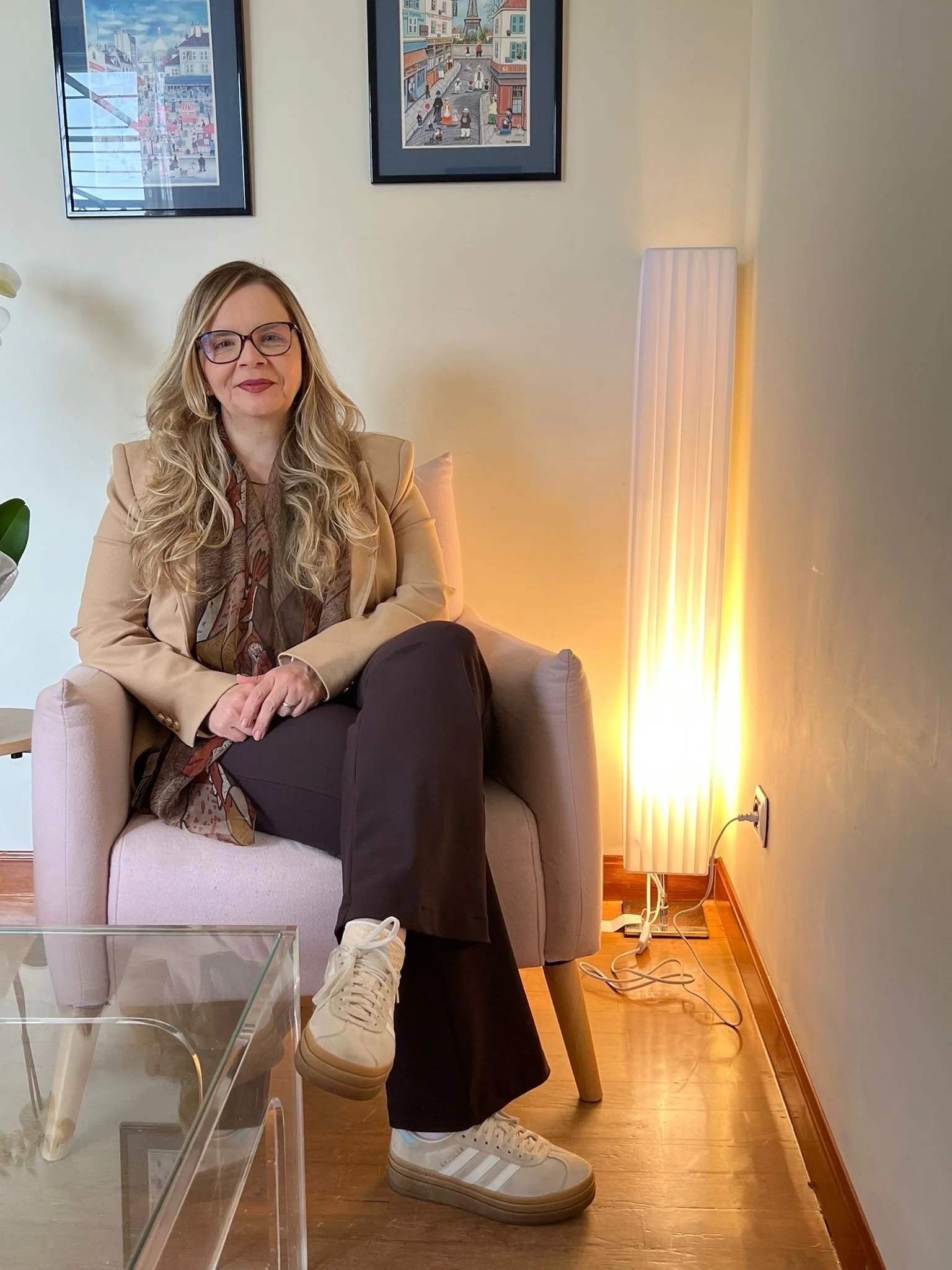
Exactly. And this really annoys me because I'm a psychologist. I have a master's degree and specialization. I'm a teacher, a professor. I have students, I train other psychologists. I've lived in many countries. But whenever they look at me, I don't think they realise any of that… Which is hard for me, because whenever I'm in Brazil, I feel recognised. But when I'm here, I'm just a Brazilian.
And that comes before your status and your education…
Yes, exactly. I think people just complete the information with what they know, or what they think they know, about Brazil… But Brazil is huge, you have everything there. You have the best doctors and the worst doctors, you have the best education system and the worst education system. But it's hard to convince people of that. So you kind of lose your identity,Yourself. This is tough because we build our identities through our entire life, our professional identity, our family identities. We construct ourselves all the time. And when we get here, we are just Brazilian. Which again, I am really proud of… But what do they mean by that?
Very interesting. Since you mentioned being a psychologist, I would love to hear a bit about that. Do you think that being a psychologist has affected your approach to motherhood? And if yes, has it made it easier or harder?
I would say being a psychologist has made being a mother more challenging, because you are always thinking about the consequences of your actions. You’re always wondering if what you’re doing is good or bad, if you're doing things the right way or not. I think every mother thinks like that, but the psychologist mum, she's a little bit crazy because she thinks about everything.
Do you feel pressure, that because you’re a psychologist, you have to get it more right than others?
Yes, of course, I'm always aware. My husband is an engineer and I do notice how different it is for him. If things are working out, he's good. If things are not working out, he tries to find solutions. But me, no, if things are going well, I'm thinking about the next problem, the next challenge. I'm always thinking ahead.
Can you give me an example?
For example, our teenage son going to school. If he’s doing well, I wonder if maybe he won’t ever want to return to Brazil. Or if he’s feeling really good here, maybe it's because there’s something that was missing there and causing him to not want to go back...
What about the little one?
With the little one we're always thinking,“Oh, it's so much easier with the second one”. And at my age, it's superb that it’s so much easier. But I'm always thinking about how he will be treated at the ‘guarderia’, the nursery, and how this will influence his development. For example the development of language, because he will be learning Portuguese, Spanish, Euskera. How is it going to affect him?
And as a psychologist, apart from raising these questions, do you also give yourself some answers or some strategies to quiet these fears? How do you handle them?
I have my own therapist.
So psychologists also see therapists?
Oh, yes. It's very, very important. The good thing about being a psychologist and raising a child is that you have ways of reaching out for information. So I have friends, I have books, I know where to look whenever I need some help understanding what's going on. Some of my friends are child therapists, they help me whenever I need it.
You just get the help wherever you can get it…
Yes, exactly.
That's very wise…Do you ever notice tension between your professional knowledge and your emotional experience as a mother? Meaning, does Desirée the psychologist have disagreements with Desirée the mum?
A lot. Desirée the psychologist has the urge to do everything right. For example, this past year I wasn't able to have dinners with my oldest because I was always taking care of the baby. So Desirée the mom was like,”Oh, this is okay, it's normal. It's expected to be really busy during this time of the life of the baby”. But Desirée the psychologist was saying, “ Well, it's very important for the teenager to have one meal with the family, like one quiet and long meal when he can talk about his things, his day”. So there is a kind of conflict. Because I keep thinking, what's the best for the oldest and the youngest? And what can I do to improve their lives? But on the other hand, psychology also teaches me a lot of self-compassion.
I like that. To be kind to yourself, right?
Yes, to be kind to myself. I talk to the oldest a lot, and I tell him to be patient, because this is a very unique time of our lives. This first year is very unique, and very demanding. But on the other hand, I know this is very important for us as a family and for the oldest to improve his independence, his way of looking at life more broadly and learning that not everything is about him.
Has he grown into this role of big brother? Has he embraced it?
For sure, I’ve noticed that he's becoming more comfortable with the role, comfortable with a baby around, comfortable with us being away more, not so into his things anymore. So it's been good for him, he's grown a lot.
What kind of emotional support do you think a child being raised between cultures would benefit from? For me, I let myself be guided by my instinct all these years, and as long as I saw them happy and thriving, I thought they were going to be okay. But now that they're older, I question myself a little bit, specifically about the fact that I don't know if their sense of belonging has developed fully, or if it has developed in the healthiest way possible. What do you think about that? How can parents help children form a stable sense of identity when they're being raised between cultures?
Identity is a very interesting concept in psychology because it is formed in a variety of ways. You have cultural identity, you have physical identity, you have family identities. We're not only one self, we are many selves... So our self is very context-based. And I think that maybe we're being very perfectionist when we say that we didn't help them develop a strong feeling of belonging and identity in one culture or another… There are many ways of developing these identities, including the identity of me living in different cultures. There's something inside us, there's a self that observes, and knows that we’re still the one that lives in Spain, lives in Italy, that lives in Brazil, that can live in many places. But it’s still me living and looking at all these experiences.
And can they coexist in a healthy way?
They can. One way of developing a healthy self, a healthy identity is to understand that identity moves and changes. Identity is not fixed. Sometimes you live one aspect of yourself in one place, and then you live another aspect of yourself in a different place. All these aspects are you, and it's okay to be living more of one and less of the other. For example now I'm living motherhood with more intensity, but for the last 10 years prior to this, I lived my professional life with more energy. Both of them are me.
It's very therapeutic for me to listen to you, because I struggled a lot with this. And that's probably one of the reasons why this project came about, I was trying to find some clarity.
So, what kind of advice would you give those who are parenting across cultures, raising children in a culture that isn’t their own?
Don’t do it by yourself. Reach out for connection with other parents. Have coffee with other mums, set up playdates, create a group and talk to each other. Motherhood should never be something you do alone. We’ve got to build our own village, so let’s build it.
I think it is especially challenging because when living abroad, parents need to be very outgoing. They need to reach out to families and speak the language of the country they are in. We need to speak some Spanish to build a bridge between our children and the others. This is very difficult for many expat families, you have to get out of your bubble and it doesn’t always come naturally.
You’re right, it definitely doesn’t always come naturally, it can feel scary to step out of your comfort zone. Do you have any fears yourself?
Well, living abroad has made me feel... afraid to be forgotten. I'm afraid to be forgotten as the experienced psychologist that I am. I'm afraid to forget some of the beautiful friends that I have in Brazil, to forget to call them, to be with them. I'm afraid that our friendship will grow weaker and weaker. I'm afraid to feel lonely as I grow older here, I'm afraid to grow older here in Spain.
Do you think you would have the same fear of growing older if you were in Brazil? Or do you think it's magnified here?
It's magnified here, it's magnified by loneliness.
It always comes back to the same thing. Connection and support, having people around you that can become your family and your strength, so that you can draw strength from people.
Exactly.
Knowing what you know now, would you do it again? Would you move your teenage son across the world and have a new baby, away from the support of your family?
I've thought a lot about this, if I would do it again… And yes, I think I would do it again. Especially because I would never have had my baby had we stayed in Brazil. Things happen the way they should. I like to think that we don't have so much control of our life, we think we do but we don't.
Well, thank you, Desirée. This has been very enjoyable, as I suspected it was going to be. I really liked taking theangle of motherhood and raising children across cultures, because it's been a huge part of my life.I really think that your interview will be helpful to a lot of parents, it’s been very insightful. Thank you so much.